

When you’re newly diagnosed, the hardest part isn’t always the label—it’s the fear of what comes next. You may feel relieved to finally have a name for what you’re experiencing. Or you might feel overwhelmed, wondering if your life is about to change in ways you didn’t choose.
At Foundations Group Behavioral Health, we understand that moment deeply. It’s fragile. It’s real. That’s why we often recommend beginning with mental health therapy—not because it solves everything overnight, but because it opens a door you get to walk through at your own pace. Learn more about our approach to therapy here.
You’re Not Broken—You’re Processing Something Big
Mental health symptoms can make everyday life feel like a maze. You might be dealing with intense anxiety, numbing depression, mood swings that leave you drained, or thoughts that don’t feel like your own. A diagnosis gives those experiences a name—but not always comfort.
Therapy offers something different. It doesn’t try to fix you. It gives you room to understand what you’re feeling, why it’s happening, and what choices you do have.
It’s not about being “sick” or “crazy.” It’s about being human in a system that rarely gives people the space to pause, breathe, and feel safe inside their own mind.
Afraid of Medication? You’re Not Alone.
Many people hesitate when they’re first prescribed psychiatric medication. You might worry it will change who you are, flatten your personality, or numb the parts of you that feel essential. Maybe a friend had a bad experience. Maybe you’re not even sure the diagnosis fits.
Therapy is where those fears can live out loud.
You don’t have to pretend. You don’t have to agree. Your therapist won’t force you to take anything. Instead, they’ll help you get clearer on what you need—whether that’s learning coping strategies, setting boundaries, exploring trauma, or eventually reevaluating the role medication might play.
There’s room for all of it in therapy.
What Therapy Can Offer—Especially at the Beginning
1. A Safe Place to Say What You’re Really Thinking
You don’t have to protect anyone else’s feelings in therapy. You don’t have to make it sound better than it is. If you’re scared, resentful, confused, or angry—that’s okay. If you don’t know how to talk about what’s happening—that’s okay too. Your words don’t have to be perfect to matter.
2. Support Without Pressure
Unlike advice from friends or even well-meaning doctors, therapy is never about rushing you into action. It’s about exploring options together. There’s no script you have to follow. Just your pace, your voice, your truth.
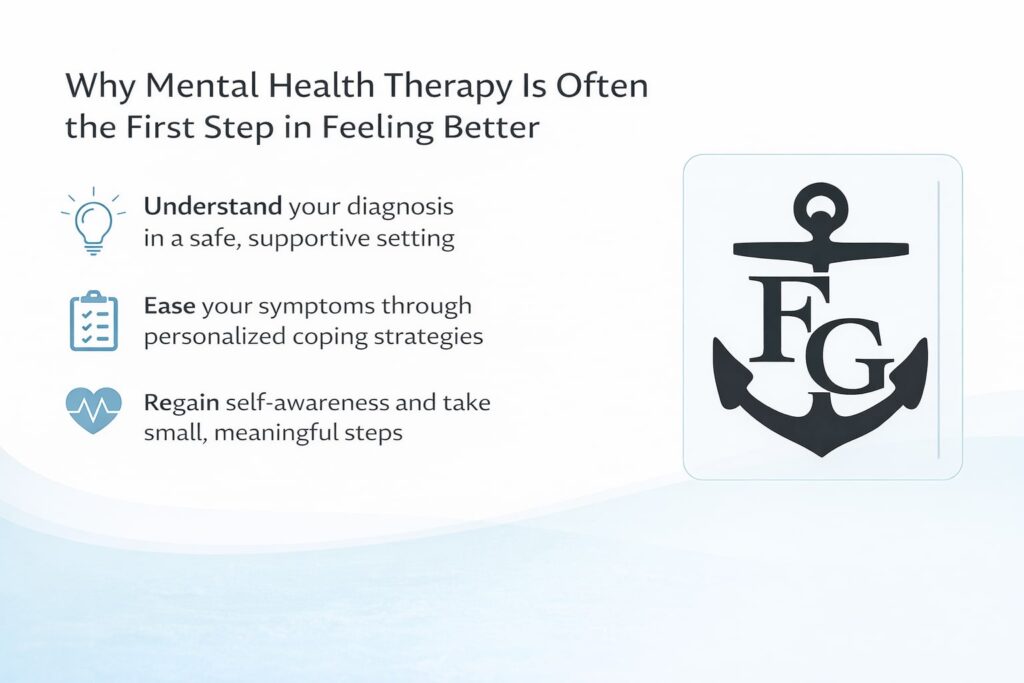
3. Understanding Your Diagnosis
A diagnosis can feel like both a map and a mystery. What does it mean for your identity? Your relationships? Your future? Therapy helps you unpack the meaning behind the label—without letting it define you.
4. Building Coping Skills
Therapy is a space to learn real, practical tools. That might mean identifying thought patterns, learning to calm your nervous system, improving communication, or finding new ways to relate to difficult emotions.
5. Reclaiming Your Agency
Mental health therapy doesn’t take your power away—it helps you use it differently. Even on hard days, you’ll start to notice: I handled that differently. I asked for help. I paused before reacting. Those are quiet wins. And they add up.
You Don’t Have to Know the End—You Just Have to Begin
If you’re feeling hesitant about starting therapy, that’s normal. Many people imagine a long, clinical process. But at its heart, therapy is a relationship. It’s two people—one trained, one hurting—showing up with honesty and care.
You don’t have to commit forever. You just have to start with one step.
That step might be calling to ask a question. It might be reading this blog. It might be walking into a first appointment unsure if you’ll stay.
All of those count. None of them are small.
Real Progress Often Looks Quiet
Therapy progress isn’t always big breakthroughs or dramatic transformations. Sometimes it’s noticing that you didn’t spiral like you used to. That you reached out when you normally wouldn’t. That your inner critic was just a little quieter today.
Those moments are real. They’re signs that healing isn’t always loud—but it is happening.
One client put it best:
“Therapy didn’t fix me—it helped me finally hear myself without panic.”
— Outpatient Client, 2023
When You’re Ready, We’re Here
Whether you’re newly diagnosed, rethinking medication, or simply want to feel less alone in your experience, therapy can help. And you deserve support that listens before it tells, that honors your fears, and that gives you time.
If you’re looking for mental health therapy that meets you where you are—not where others think you should be—we’re here to help.
📍 Our mental health therapy page includes more information about treatment options and what to expect. Personalized Mental Health & Addiction Care in Barnstable County, Falmouth, MA.
Frequently Asked Questions About Starting Therapy
Do I need to take medication before starting therapy?
No. Many people begin therapy without taking medication. In fact, therapy can be a helpful first step if you’re unsure about whether medication is right for you.
How do I know if therapy is working?
Progress in therapy often looks subtle at first—feeling more aware of your thoughts, responding to stress differently, or feeling less alone. Your therapist will help track this together with you.
What if I don’t click with my therapist?
That’s okay. Therapy works best when there’s trust and connection. If it doesn’t feel like a good fit, it’s always okay to request a different provider. A good therapist will support that decision.
How long do I need to stay in therapy?
There’s no one-size-fits-all answer. Some people find benefit in just a few months; others continue for longer. You and your therapist can decide together what feels right.
Can I do therapy without a formal diagnosis?
Yes. You don’t need a diagnosis to begin therapy. If you’re struggling, curious, or just want support—therapy is available to you.
A Gentle First Step Can Still Be Powerful
Therapy doesn’t have to be your forever plan—but it can be your first foothold. It’s a place where your fears don’t need to be hidden and your story doesn’t need to be edited. You get to show up as you are—and decide, slowly, where you want to go.
📞 Ready to begin? Call 888-685-9730 or visit us here to learn more about our mental health therapy services in Cape Cod, MA. We’ll meet you at the beginning—with clarity, kindness, and care.