

What Is Generational Trauma?
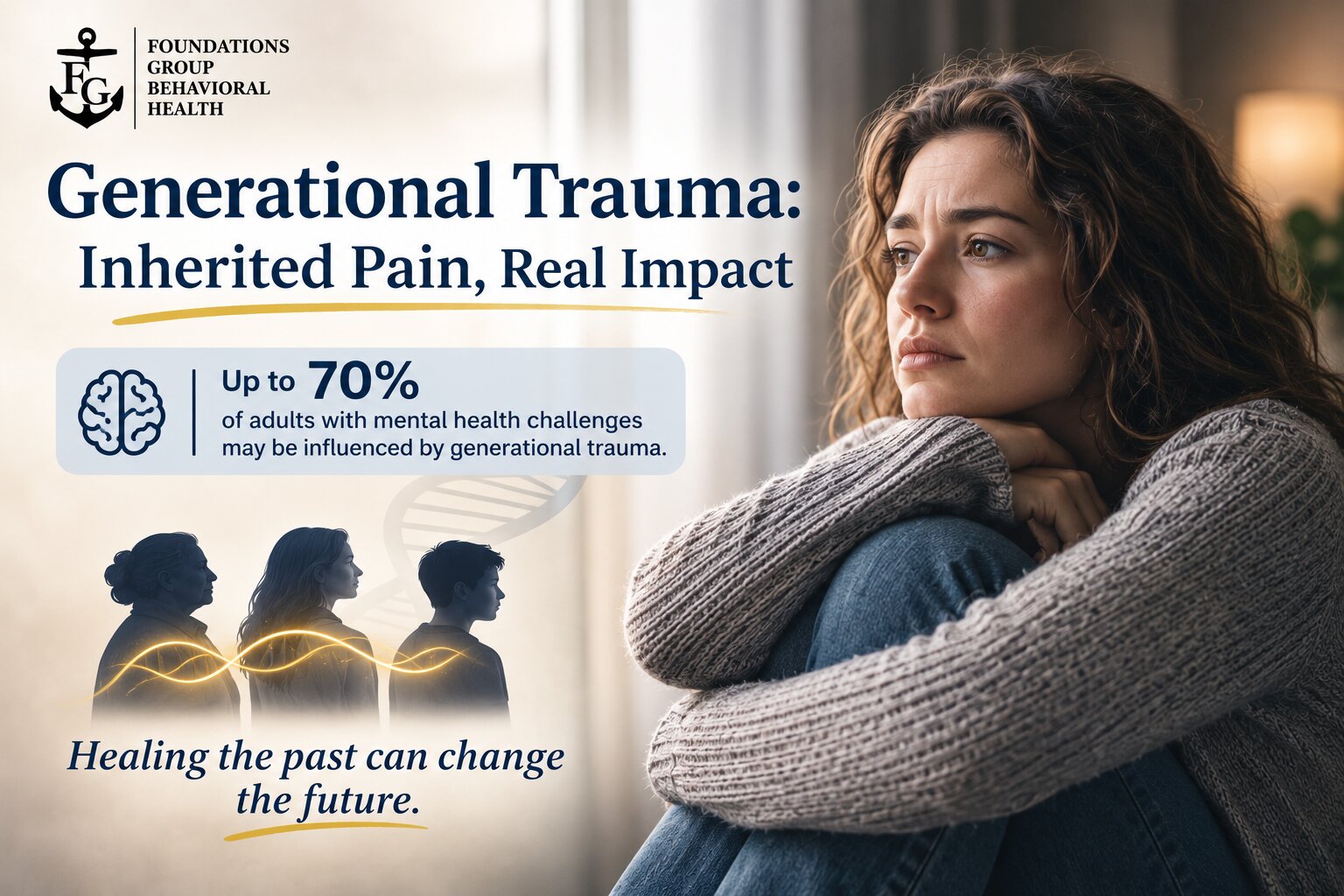
Generational trauma — also called intergenerational trauma or transgenerational trauma — is the transmission of the psychological and emotional effects of trauma from one generation to the next. It occurs when the lasting impact of a traumatic experience in one generation shapes the behavior, emotional responses, and even the biology of subsequent generations.
Unlike post-traumatic stress disorder, which develops from direct exposure to a traumatic event, generational trauma can affect people who never experienced the original trauma firsthand. Their parents did. Or their grandparents. Or entire communities did. And the reverberations travel forward through time in ways that aren’t always visible but are deeply felt.
Generational trauma has been documented across a wide range of populations — Holocaust survivors and their descendants, communities affected by slavery, Indigenous populations who experienced forced displacement, refugees, and families shaped by war, famine, or chronic abuse.
How Generational Trauma Is Passed Down
There are three primary pathways through which trauma moves between generations. Most families experience a combination of all three.
Through Parenting Behaviors and Family Dynamics
Trauma changes how people parent. A parent who grew up in danger may become hypervigilant, overprotective, or emotionally unavailable — not because they don’t love their children, but because their nervous system learned that the world is unsafe. A parent whose emotional needs were never met may struggle to attune to their child’s needs, not out of indifference but out of having never learned how.
Children absorb these patterns. They learn what emotions are acceptable to express. They learn whether vulnerability is safe. They learn what relationships feel like — and they carry those templates into adulthood.
Through Attachment Patterns
Attachment theory describes how early relationships with caregivers shape our internal model of connection. Trauma disrupts secure attachment — and insecure attachment patterns (anxious, avoidant, disorganized) are passed from parent to child through the quality of early caregiving, not through conscious teaching.
A parent with unresolved trauma may be inconsistently available — present and warm sometimes, withdrawn or frightening at others. This unpredictability creates anxious or disorganized attachment in children, who then carry that template into their own adult relationships and, eventually, their own parenting.
Through Epigenetics
Perhaps the most striking research on generational trauma involves epigenetics — the study of how environmental experiences can change the way genes are expressed without changing the underlying DNA sequence. Studies of Holocaust survivors and their children found measurable differences in stress hormone regulation compared to controls. Research on famine survivors has shown effects on metabolic and stress response patterns in grandchildren.
This is still an emerging field, and it’s important not to overstate the determinism: having a biological predisposition is not the same as a fixed destiny. But the research does suggest that trauma’s effects can be biological as well as behavioral and psychological.
If these patterns feel familiar, trauma treatment at Foundations Group Behavioral Health offers specialized care designed to help you identify and address trauma’s impact including trauma you didn’t directly experience.
Signs You May Be Experiencing Generational Trauma
Generational trauma doesn’t always announce itself clearly. It often masquerades as personality traits, anxiety, or “just the way our family is.” Some signs to look for:
- Anxiety or hypervigilance without a clear personal source — a persistent sense of danger or need to be on guard that doesn’t map onto your own life experiences
- Difficulty trusting authority, institutions, or systems — particularly if your family history includes experiences of betrayal or oppression by those systems
- Shame or guilt that feels disproportionate — emotional weight that seems larger than your own story
- Repeating relationship patterns — finding yourself in dynamics that echo what you observed growing up, even when you’ve consciously tried to do things differently
- Emotional numbness or emotional flooding — either cut off from feelings or overwhelmed by them, with little middle ground
- Chronic physical symptoms — stress-related conditions like autoimmune issues, digestive problems, or chronic pain with no clear medical explanation
- A strong family “script” — unspoken rules about what can be talked about, what emotions are acceptable, or what the family story is
None of these symptoms alone confirms generational trauma. But in combination — and particularly when they don’t fully map onto your own direct experiences, they can point toward inherited patterns worth exploring.
Common Sources of Generational Trauma
Generational trauma can originate from almost any overwhelming experience that a family or community didn’t have the resources to fully process. Common sources include:
- Historical and collective trauma — war, genocide, slavery, forced displacement, colonization, famine
- Family-level trauma — chronic abuse, neglect, sudden loss, domestic violence, or severe mental illness within the family system
- Cultural and racial trauma — the cumulative impact of discrimination, systemic oppression, and race-based violence
- Poverty and chronic stress — the ongoing physiological toll of scarcity, instability, and lack of safety
- Immigration and displacement — the loss of community, language, identity, and safety that accompanies forced or traumatic migration
Generational Trauma vs. PTSD vs. C-PTSD
These three frameworks are related but distinct:
- PTSD develops from direct exposure to a traumatic event. Symptoms include re-experiencing, avoidance, and hyperarousal. For a full breakdown, see our post on What Are the 17 Symptoms of PTSD?
- Complex PTSD (C-PTSD) develops from prolonged, repeated trauma — often interpersonal in nature. It includes PTSD symptoms plus emotional dysregulation, a negative self-concept, and relational difficulties.
- Generational trauma involves inherited responses — patterns absorbed from caregivers or transmitted biologically — without necessarily having experienced the originating trauma directly. A person can carry generational trauma without meeting criteria for PTSD or C-PTSD.
These can also co-occur: a person may have experienced their own direct trauma (creating PTSD or C-PTSD) while also carrying inherited patterns from family history. In these cases, treatment needs to address both layers.
How to Break the Cycle of Generational Trauma
Breaking the cycle doesn’t require erasing history or fixing everything that came before. It requires awareness and the willingness to respond differently — to yourself and, if you’re a parent, to your children.
Awareness is the first step. Recognizing a pattern as inherited rather than fixed is itself a form of liberation. When you can say “this hypervigilance isn’t just who I am — it’s what my family learned to survive,” you create space to choose a different response.
Individual therapy is typically the most important intervention. Trauma-focused approaches that have shown strong results for generational and complex trauma include:
- Trauma-focused cognitive behavioral therapy (TF-CBT)
- Eye movement desensitization and reprocessing (EMDR)
- Somatic therapies that work with the body’s stored stress responses
- Internal Family Systems (IFS)
Family therapy can be valuable when the patterns play out in current family relationships — helping family members understand the broader context and break cycles together rather than separately.
Community and cultural healing is particularly important for trauma rooted in collective or historical events. Individual therapy may not be sufficient when the wound is communal. Connection with others who share the history, cultural rituals, and community-based healing practices all play a role.
Language and naming. One of the most powerful tools available is simply naming what happened. “This is a trauma response” is different from “this is just how I am.” Stories that have been silenced — in families, in communities — have less power when they can be spoken.
Can Generational Trauma Be Healed?
Yes — though healing looks different from what many people expect. It’s rarely a single breakthrough moment. It’s a gradual process of building new patterns: new ways of relating to yourself and others, new narratives about what happened and why, and new capacities for the emotional range that trauma suppressed.
Research on resilience and post-traumatic growth shows that people can and do recover from the effects of generational trauma — and that doing so often has downstream effects on the next generation. Parents who address their own unresolved trauma tend to raise children with more secure attachment. The cycle can run in both directions.
Frequently Asked Questions
Is generational trauma a diagnosable condition?
Not in the DSM-5 as a standalone diagnosis. However, the effects of generational trauma often manifest as diagnosable conditions — PTSD, anxiety disorders, depression, attachment disorders, or complex PTSD. Clinicians trained in trauma-informed care understand how to work with these patterns even when they don’t fit neatly into a single diagnostic category.
How do I know if my anxiety is generational trauma or my own?
Often it’s both. But a useful question to ask is: does this anxiety map onto things that have actually happened to me, or does it feel larger than my own experiences? Anxiety that seems disproportionate to your personal history — or that mirrors fears your parents or grandparents expressed — may have intergenerational roots worth exploring with a therapist.
Can children inherit trauma from parents who never talked about it?
Yes — and this is one of the most important findings in the field. Unspoken trauma is still transmitted through parenting behavior, emotional availability, family dynamics, and potentially through epigenetic mechanisms. The absence of words doesn’t mean the absence of impact.
What types of therapy help with generational trauma?
Trauma-focused CBT, EMDR, somatic therapies, IFS, and family systems therapy all have evidence supporting their use with generational and complex trauma. The right approach depends on the individual, the nature of the trauma, and what’s most accessible. A trauma-informed clinician can help you determine the best fit.
Starting the Healing Process
Generational trauma can shape your life in ways you haven’t fully recognized — but it doesn’t have to define your future or your children’s. The patterns can change. The cycle can stop. Personalized mental health & addiction care in Barnstable County, Falmouth, MA.
Foundations Group Behavioral Health offers trauma-informed care designed to help you process the past and build a different future. Learn about our trauma treatment program or take the first step today. You can also reach us at (888) 685-9730.