

If you’ve recently been diagnosed—or you’re wondering whether a past diagnosis was accurate—you may have searched bipolar vs BPD hoping for a clear answer. That’s understandable. These two conditions can share emotional intensity, impulsive behavior, and relationship challenges, making them easy to confuse at first glance.
The distinction matters because the most effective treatments are not the same. Learning more about bipolar disorder treatment can help you understand how bipolar disorder is evaluated and managed, but it’s equally important to recognize why clinicians carefully distinguish it from borderline personality disorder (BPD).
One of the biggest misconceptions is that both conditions simply involve “mood swings.” In reality, the clearest clinical difference is how emotions change, what triggers them, and how long they last. Understanding that difference can help you make sense of your symptoms while reducing unnecessary self-blame or fear about a diagnosis.
Bipolar Disorder vs BPD: At a Glance
The table below highlights the most important differences between bipolar disorder vs borderline personality disorder.
Feature |
Bipolar Disorder |
Borderline Personality Disorder (BPD) |
|---|---|---|
| Underlying condition | Mood disorder | Personality disorder |
| Primary pattern | Distinct mood episodes | Ongoing emotional dysregulation |
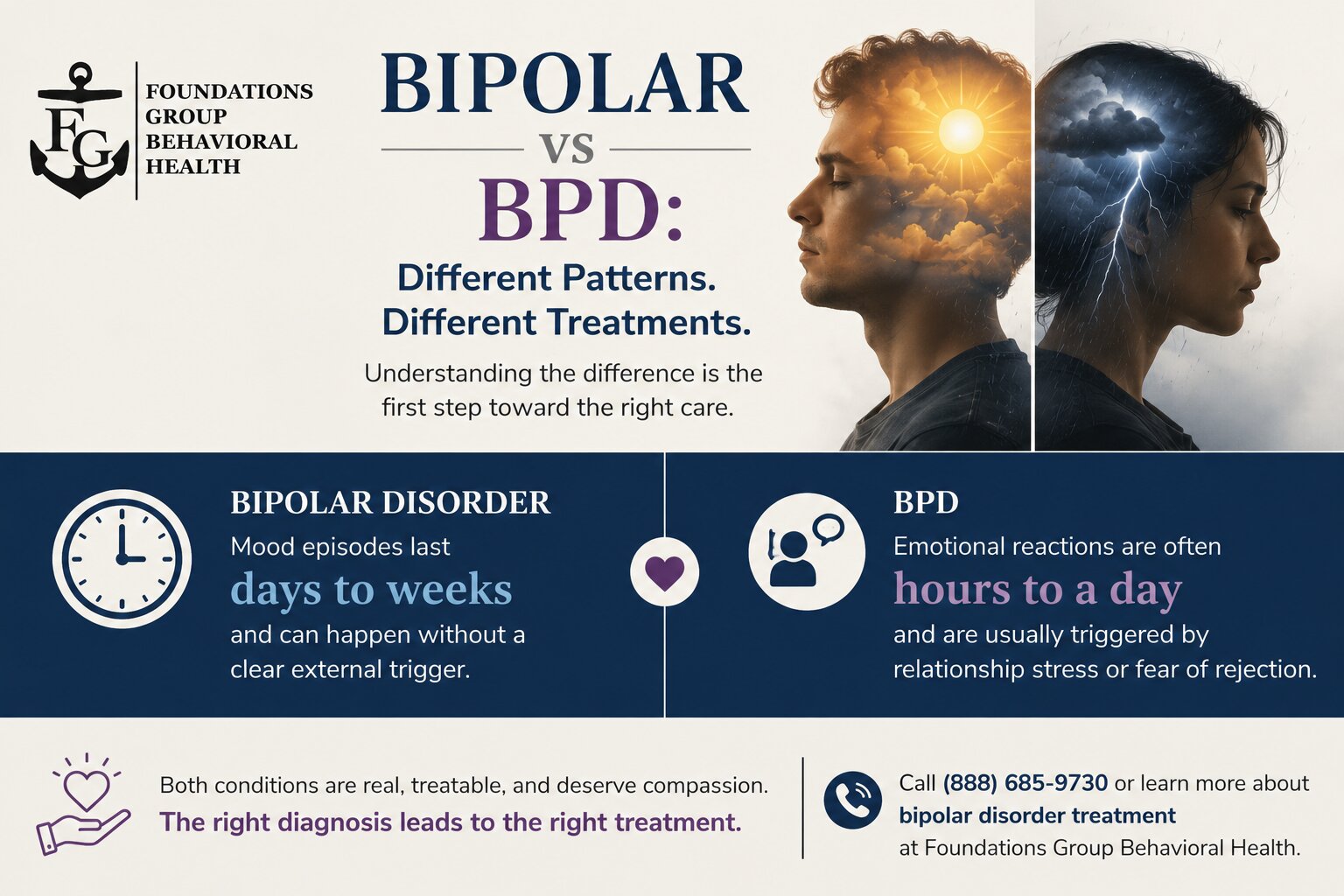
| Episode duration | Days to weeks (or longer) | Hours to a day, sometimes longer |
| Common triggers | May occur without a clear external trigger | Often triggered by interpersonal stress, rejection, or perceived abandonment |
| Mood changes | Sustained mania, hypomania, or depression | Rapid emotional shifts in response to situations |
| Identity disturbance | Usually not a defining feature | Common and often persistent |
| Relationship patterns | May fluctuate during mood episodes | Frequently characterized by fear of abandonment and intense relationship dynamics |
| Primary treatment | Mood stabilizers, medication, and psychotherapy | Dialectical Behavior Therapy (DBT) and psychotherapy; medication may help specific symptoms but is not the primary treatment |
While this comparison is helpful, diagnosis is rarely based on one symptom alone. Mental health professionals consider symptom history, duration, severity, patterns over time, and how symptoms affect daily functioning.
What Is Bipolar Disorder?
Bipolar disorder is a mood disorder characterized by episodes of depression and episodes of mania or hypomania.
These mood episodes are more than temporary emotional reactions.
They involve sustained changes in mood, energy, activity, sleep, thinking, and behavior that often last for days or weeks.
During mania or hypomania, someone may experience:
- Increased energy
- Reduced need for sleep
- Racing thoughts
- Elevated or unusually irritable mood
- Increased confidence
- Impulsive spending or risky decisions
- Talking much more than usual
Depressive episodes may include:
- Persistent sadness
- Loss of interest
- Fatigue
- Difficulty concentrating
- Changes in appetite or sleep
- Feelings of hopelessness
An important feature of bipolar disorder is that these episodes can occur without an obvious external event. Someone may wake up feeling dramatically different despite nothing significant happening in their environment.
If you’re exploring symptoms or have recently received a diagnosis, learning about bipolar disorder treatment can provide a better understanding of evidence-based care.
What Is Borderline Personality Disorder?
Borderline personality disorder (BPD) is a personality disorder characterized by difficulties regulating emotions, maintaining a stable sense of self, and navigating relationships.
Unlike bipolar disorder, BPD is not primarily defined by prolonged mood episodes.
Instead, emotions tend to be highly reactive.
A disagreement with a partner, perceived rejection from a friend, or fear that someone may leave can trigger intense emotional distress.
People with BPD may experience:
- Rapid emotional changes
- Fear of abandonment
- Intense or unstable relationships
- Uncertainty about identity or self-image
- Impulsive behavior
- Difficulty calming down after emotional stress
- Chronic feelings of emptiness
The emotional pain experienced with BPD is very real. It is not attention-seeking or a choice, and it deserves the same compassion and evidence-based care as any other mental health condition.
The Key Distinction: Mood Episodes vs. Reactive Emotional Dysregulation
This is the most important difference between bipolar disorder and BPD.
Although both conditions involve emotional intensity, they do not affect emotions in the same way.
Bipolar Disorder Involves Mood Episodes
In bipolar disorder, emotional changes happen as part of a broader mood episode.
These episodes typically:
- Last several days to weeks
- Affect mood, sleep, energy, concentration, and behavior
- May develop without a clear external trigger
- Continue regardless of whether circumstances improve
For example, someone experiencing mania may remain unusually energetic, sleep only a few hours each night, and feel exceptionally confident for several days even when life around them remains stable.
Likewise, a depressive episode often continues despite positive events or reassurance from others.
The mood state itself drives the experience.
BPD Involves Reactive Emotional Dysregulation
In BPD, emotions are usually connected to what is happening around the person.
Rather than prolonged mood episodes, emotional reactions tend to be:
- Triggered by interpersonal situations
- Extremely intense
- Quick to develop
- More likely to improve once the triggering situation changes
Imagine receiving a text that feels unusually cold or distant.
For someone with BPD, that moment may trigger overwhelming fear of abandonment, sadness, anger, or panic.
The emotional response is genuine and powerful—but it often changes as the situation evolves or reassurance is received.
This pattern is sometimes called emotional dysregulation.
Duration Is the Clearest Clinical Difference
One of the easiest ways to remember the distinction is to compare how long emotional changes typically last.
Bipolar disorder:
- Mood episodes generally last days, weeks, or longer
- Mood changes often continue independent of external events
BPD:
- Emotional storms often develop rapidly
- Symptoms commonly fluctuate within hours or the same day
- Emotions are frequently linked to relationship stress or perceived rejection
This doesn’t mean every emotional reaction fits neatly into one category.
Mental health professionals evaluate patterns over months and years rather than relying on one difficult day.
Why the Difference Matters
Understanding the distinction isn’t simply about labels.
It directly affects treatment.
If bipolar disorder is mistaken for BPD, someone may not receive medications that effectively stabilize mood episodes.
If BPD is mistaken for bipolar disorder, they may receive medications while missing therapies—such as Dialectical Behavior Therapy (DBT)—that have the strongest evidence for improving emotional regulation and relationships.
The goal is never to prove one diagnosis is “better” than another.
The goal is making sure treatment matches the condition being treated.
Why Misdiagnosis Can Happen
Questions about BPD misdiagnosis bipolar are common because the conditions share several symptoms, including:
- Emotional intensity
- Irritability
- Impulsive behavior
- Relationship difficulties
- Depression
- Suicidal thoughts or self-harm in some individuals
Without understanding the timing, duration, and triggers of symptoms, the differences can appear subtle.
That’s why clinicians typically ask detailed questions about:
- How long mood changes last
- Whether symptoms occur without obvious triggers
- Childhood and family history
- Sleep patterns
- Relationships
- Daily functioning
- Previous treatment responses
Diagnosis is based on patterns—not isolated symptoms.
Can You Have Both Bipolar Disorder and BPD?
Yes. Bipolar disorder and borderline personality disorder can occur together.
This is known as comorbidity.
Someone may experience:
- Distinct manic or depressive episodes characteristic of bipolar disorder
- Persistent emotional dysregulation associated with BPD
When both conditions are present, treatment often combines medication for mood stabilization with psychotherapy that addresses emotional regulation, relationships, and coping skills.
Because symptoms overlap, a comprehensive mental health assessment is especially important before deciding on a treatment plan.
Treatment and Overlap
Although bipolar disorder and BPD require different primary approaches, both conditions are treatable.
For bipolar disorder, treatment commonly includes:
- Mood stabilizing medication
- Sometimes atypical antipsychotic medication
- Individual therapy
- Psychoeducation
- Lifestyle strategies that support consistent sleep and routines
For borderline personality disorder, treatment often focuses on:
- Dialectical Behavior Therapy (DBT)
- Individual psychotherapy
- Emotional regulation skills
- Distress tolerance
- Interpersonal effectiveness
- Mindfulness strategies
Medication may help specific symptoms in BPD, but it is generally not considered the primary treatment in the way mood stabilizers are for bipolar disorder.
If you’ve questioned your diagnosis, worried you’ve been misunderstood, or feel that treatment hasn’t addressed your symptoms, discussing those concerns with a qualified mental health professional is worthwhile. An accurate diagnosis can clarify why certain treatments have—or haven’t—been effective and help guide the next steps.
The Right Diagnosis Opens the Door to the Right Care
Receiving a mental health diagnosis can bring relief, uncertainty, or both. It’s normal to wonder whether the diagnosis is accurate or to worry about what it means for your future.
The important thing to remember is that bipolar disorder and BPD are both legitimate mental health conditions that deserve understanding—not judgment.
The most meaningful question isn’t, “Which diagnosis is worse?”
It’s, “Which diagnosis best explains my experiences so I can receive the most effective care?”
If recurring mood changes, emotional distress, or questions about your diagnosis are affecting your life, a comprehensive assessment can provide clarity and help identify the treatment approach that fits your needs. Personalized mental health & addiction care in Barnstable County, Falmouth, MA.
Call (888) 685-9730 or learn more about bipolar disorder treatment at Foundations Group Behavioral Health.
Frequently Asked Questions
What is the difference between bipolar and BPD?
The primary difference is that bipolar disorder involves mood episodes that usually last days or weeks and may occur without an obvious trigger, while BPD involves emotional reactions that are often triggered by interpersonal situations and typically fluctuate much more rapidly.
Can you have both bipolar and BPD?
Yes. Some people meet the diagnostic criteria for both conditions. When this occurs, treatment may combine mood-stabilizing medication with psychotherapy such as DBT to address emotional regulation and relationship challenges.
How is BPD misdiagnosed as bipolar?
Both conditions can involve emotional intensity, impulsivity, depression, and relationship difficulties. Without carefully evaluating symptom duration, triggers, and long-term patterns, they can appear similar. A thorough mental health assessment helps distinguish between them.