

For years, I believed my anxiety was just part of my ambition.
It kept me alert. It made me early to everything. It pushed me to triple-check emails and rehearse every conversation before it happened. I thought the constant tension in my chest and the 3:00 a.m. wakeups were normal. Maybe even necessary.
I told myself: This is just how I operate.
I was wrong.
What I thought was my edge turned out to be a weight I didn’t know I could put down—until I entered an anxiety treatment program in Cape Cod.
And the moment I finally felt peace—not just temporary relief, but real, sustainable calm—I realized how much of my life had been shaped by fear I’d mistaken for drive.
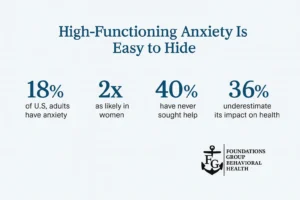
High-Functioning Anxiety Is Easy to Hide
Especially from yourself.
It doesn’t usually look like breakdowns or panic attacks. It looks like promotions. Clean houses. Perfectly packed school lunches. Calendar blocks that run from 6 a.m. to midnight.
It looks like showing up for everyone—except yourself.
People call you dependable, ambitious, even inspiring. But they don’t see you chewing your nails raw on the way home from work, or crying in the shower, or staring at the ceiling while your mind loops worst-case scenarios on repeat.
The problem isn’t that you’re anxious. It’s that your anxiety has become so tied to your identity, you don’t know where it ends and you begin.
I get it. I see it every day in my work—and I’ve lived it, too.
I Didn’t Know I Was Anxious—Just “Always On”
I thought I was just the kind of person who couldn’t relax.
Even on weekends, I’d fill every moment with tasks. The idea of sitting on the couch with nothing to do made my skin itch. I checked work emails during family dinners. I mentally rehearsed meetings while brushing my teeth. I couldn’t fall asleep unless I was physically exhausted—and even then, it wasn’t restful.
The truth is, I didn’t know what peace felt like. And I definitely didn’t think I deserved it.
Most of the high-functioning people I work with don’t walk into treatment saying, “I have anxiety.” They say things like:
- “I’m just really busy.”
- “I can’t seem to turn my brain off.”
- “I feel like I’m constantly behind.”
- “I know I’m successful, but I don’t feel it.”
Anxiety doesn’t always scream. Sometimes it whispers: Keep going. Don’t stop. You’ll fall apart if you rest.
The Turning Point Wasn’t a Breakdown—It Was a Realization
I didn’t hit a dramatic low. I didn’t miss deadlines or forget how to function. I just started to realize how numb I’d become to joy.
Things that should’ve made me happy—vacations, birthdays, even accomplishments—felt flat. My mind was always somewhere else, worrying about what was next.
The first time I sat in a therapy session as part of an anxiety treatment program and heard someone describe my exact internal state, I felt two things: relief, and grief.
Relief, because I wasn’t crazy or weak. Grief, because I realized how long I’d been living this way.
I thought anxiety made me high-performing. But peace made me human again.
What Actually Happens in an Anxiety Treatment Program
Before I joined, I imagined something cold and clinical. I pictured long talks about my childhood and being told to meditate more. I was wrong.
At Foundations Group Behavioral Health, here’s what treatment actually looked like:
- Individual therapy that met me where I was—not where someone thought I should be.
- Group sessions that normalized what I felt instead of pathologizing it.
- Somatic tools that helped my body calm down when my thoughts wouldn’t.
- Skills training for things I’d never learned, like how to pause without guilt or say no without over-explaining.
- Real conversations about how high-functioning people often mask their symptoms until it hurts too much to ignore.
I wasn’t told to stop being ambitious or to quit my job. I was shown how to create a life where I could still care deeply—without burning out every 6 months.
If you’re in Barnstable County or near Falmouth, MA, access to this kind of local care means you don’t have to choose between your schedule and your sanity. Support is here—and it’s designed for people like you.
Real Peace Feels Strange at First—But It Lasts
I won’t pretend it was easy.
The first few weeks, peace felt like a void. My body kept waiting for the next email, the next crisis, the next deadline. But nothing came. Just stillness.
I thought: Is this it?
Then slowly, something shifted. I started noticing when I was tense—and choosing to soften. I stopped checking my phone the second I woke up. I took a full lunch break, and no one died.
My thoughts were still there—but they weren’t running the show anymore.
And that’s what peace actually is: the ability to exist without fear constantly steering your decisions.
If This Feels Familiar, You’re Not Failing—You’re Just Tired
You don’t have to crash to get help. You don’t need to “prove” you’re struggling by falling apart publicly.
If you’re quietly unraveling behind the scenes—while looking perfectly fine from the outside—it’s not a sign that you’re strong. It’s a sign you’re surviving. And survival isn’t the same as living.
An anxiety treatment program in Cape Cod won’t erase your ambition. It’ll help you stop mistaking suffering for success.
FAQs: Anxiety Treatment for High-Functioning Adults
Do I have to stop working to get help?
No. Many programs, especially outpatient models like those in Cape Cod, are built for professionals and offer flexible scheduling that supports your life—not disrupts it.
What if I don’t have panic attacks?
You can still have anxiety. Many high-functioning adults experience mental tension, irritability, perfectionism, and sleep issues without classic panic symptoms.
Will I be forced to share in groups?
No. You’ll never be pressured to speak before you’re ready. Group settings are supportive and voluntary—and often feel safer than expected.
Can I still be myself if I stop being anxious?
Yes. You’ll still be driven, passionate, and insightful—just not constantly exhausted or on edge. Many clients say they feel more like themselves after treatment.
How do I know if I need this?
If you’ve ever wondered whether it’s “bad enough” to seek help—it probably is. You deserve more than just managing. You deserve to feel okay.
You don’t have to white-knuckle your way through life.
Call 888-685-9730 or visit Foundations Group Behavioral Health’s anxiety treatment program page to learn more about how we support high-functioning adults in Cape Cod who are ready to stop surviving and start living.