

I used to tell people treatment didn’t work for me.
It was the simplest answer.
Cleaner than the real story.
I’d done the groups, sat in the chairs, nodded through therapy sessions, and still ended up right back where I started. So when someone asked, I’d shrug and say, “Yeah, I tried that. Didn’t work.”
But the truth?
That sentence hid a lot more than it explained.
If you’ve ever said the same thing, you’re not alone. And you’re not crazy for feeling skeptical about programs like the ones offered through co-occurring disorder care in Massachusetts.
Sometimes the real story takes a little longer to understand.
I Thought Treatment Was Supposed to “Fix Me”
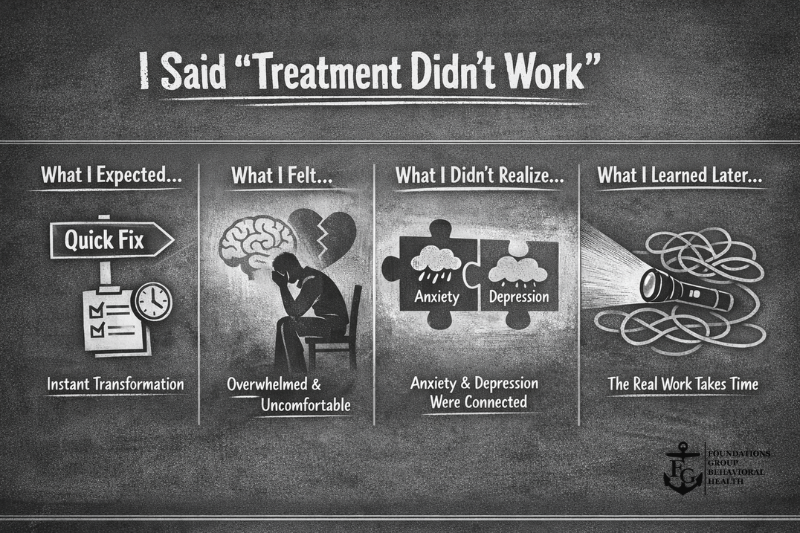
The first time I went to treatment, I secretly expected a transformation.
Thirty days.
Maybe a few therapy sessions.
Some motivational talks.
And somehow I’d come out feeling like a completely different person.
Instead, what I felt was… uncomfortable.
People asked questions I didn’t want to answer.
Therapists kept circling back to things I’d been avoiding for years.
And every time I thought we were talking about my substance use, the conversation drifted toward anxiety, depression, trauma.
I remember thinking:
Why are we talking about all this other stuff?
Now I know the answer. But back then it just felt frustrating.
What I Actually Meant When I Said “It Didn’t Work”
Most people who say treatment didn’t work usually mean one of these things:
- They left before things got deeper
- They were only focused on stopping substances, not the reasons behind them
- The program wasn’t the right fit
- They weren’t ready yet
- They were dealing with more than one mental health issue at the same time
None of those things make someone a failure.
But they can make treatment feel pointless if nobody explains what’s really going on.
For me, the missing piece was understanding that my anxiety and depression weren’t side issues.
They were part of the whole problem.
When Mental Health and Substance Use Collide, It Gets Complicated
For years I thought my drinking was the problem.
But it turned out drinking was more like duct tape.
It held things together for a while… until it didn’t.
Underneath that was panic, insomnia, racing thoughts, and a constant feeling that something inside me was broken.
When those things aren’t addressed, stopping substances can feel impossible. You’re left facing the same storm without the thing you used to quiet it.
That’s why some people start looking into options like behavioral health treatment programs in Massachusetts that address both sides of the struggle instead of pretending they’re separate.
Because they usually aren’t.
The Moment I Realized I Had Misjudged Treatment
This didn’t happen during treatment.
It happened months later.
I was talking to someone who had also gone through a program. I told them my usual line:
“Yeah, I tried treatment. Didn’t work.”
They looked at me and said something simple.
“Or maybe it just showed you things you weren’t ready to deal with yet.”
That hit harder than anything I heard in therapy.
Because when I thought about it honestly… treatment had worked in one important way.
It forced me to see things I had been avoiding my entire life.
I just wasn’t ready to act on them yet.
Not Every Program Is the Same
Another thing nobody told me the first time around:
Programs can be very different.
Some focus mostly on substance use.
Some lean heavily into therapy.
Some are rigid and structured.
Others are more flexible.
And some actually understand what happens when multiple mental health struggles overlap.
Finding the right environment matters more than people realize.
Because if the approach doesn’t match what you’re dealing with, it can absolutely feel like treatment failed even when the issue was the fit.
The Quiet Truth Most People Realize Later
Here’s the uncomfortable truth.
Treatment doesn’t “work” the way people expect it to.
It’s not a repair shop.
It’s more like someone handing you a flashlight and saying:
“This is where the real work starts.”
And yeah… sometimes people put the flashlight down for a while.
But that doesn’t mean the light didn’t matter.
It just means the timing wasn’t right yet.
Many people who once said treatment failed eventually return to programs like behavioral health treatment programs Massachusetts when they realize the deeper issues were never addressed the first time.
Not because they’re weak.
Because now they understand what they’re actually facing.
If You’re Skeptical, That Makes Sense
Skepticism isn’t the enemy.
Blind optimism is.
If you’ve tried treatment before and walked away disappointed, your reaction makes sense. Nobody likes feeling like they wasted time or hope.
But one experience doesn’t define every option.
And sometimes the difference isn’t trying again.
It’s trying differently.
Ready to Explore What the Next Step Could Look Like?
If your past experience left you skeptical, that’s understandable. But support that addresses both mental health and substance use together can make a real difference.
Call 888-685-9730 or visit our co-occurring disorder care in Massachusetts page to learn more about our behavioral health treatment programs Massachusetts, co-occurring disorder treatment program in Massachusetts.