

Loving someone with bipolar disorder can feel like riding emotional weather you can’t control. When substance use enters the picture too, the storm often grows louder, more confusing, and harder to navigate.
Many partners quietly ask the same question: Is there real help for this?
Programs offering bipolar disorder treatment support in Massachusetts are designed for situations exactly like this—when mental health and substance use begin feeding off each other and affecting everyone involved.
When Bipolar Disorder and Substance Use Intertwine
Bipolar disorder already creates powerful shifts in mood, energy, and behavior. When alcohol or drugs enter the picture, those swings often become more intense.
Substances may temporarily numb depression or amplify the confidence of a manic phase. But over time, they usually deepen instability.
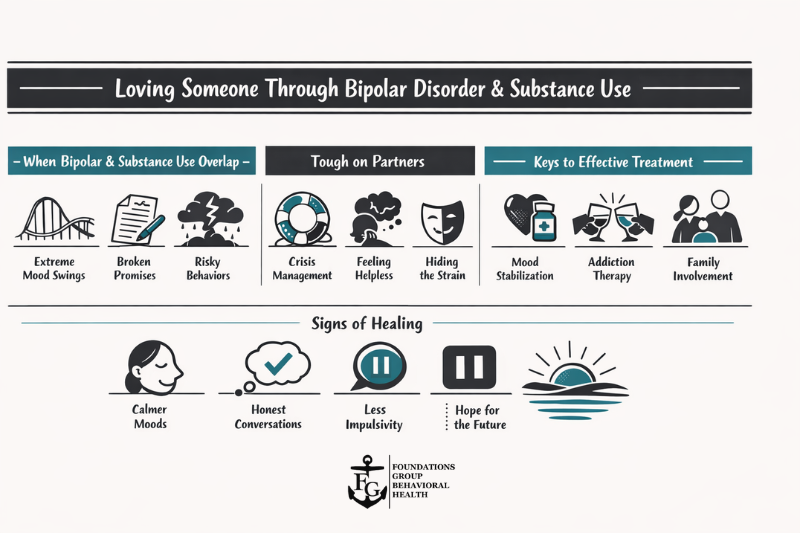
For partners, this can look like:
- Periods of intense connection followed by emotional distance
- Promises to stop using that dissolve during the next mood shift
- Sudden bursts of energy, spending, or risk-taking
- Long stretches where your loved one seems unreachable
You might find yourself constantly scanning the room for signs of the next shift.
Why Substance Use Often Appears in Bipolar Disorder
Many people living with bipolar disorder turn to substances as a way to cope with feelings that seem too big to manage.
Depressive episodes can bring deep exhaustion and hopelessness. Manic phases can feel overwhelming or out of control. Substances may initially feel like relief.
But the brain chemistry involved in bipolar disorder is sensitive. Alcohol or drugs can disrupt mood regulation even further, making episodes more frequent or more severe.
What started as a coping strategy often becomes another layer of the illness.
The Hidden Weight Partners Carry
Partners often become quiet stabilizers in the background.
You might find yourself:
- Managing crises behind the scenes
- Making excuses to family or coworkers
- Monitoring medications, sleep, or substance use
- Wondering if you’re helping… or accidentally making things worse
Many people in your position love deeply but feel exhausted by the unpredictability.
And one of the hardest truths is this: love alone cannot stabilize bipolar disorder or addiction.
But structured support can.
How Structured Treatment Helps Stabilize Both Conditions
Effective care recognizes that bipolar disorder and substance use affect each other. Treating one without addressing the other rarely creates lasting stability.
In treatment settings, care teams often focus on several areas at once:
Mood stabilization
Psychiatric care helps regulate the emotional highs and lows that drive many risky behaviors.
Substance recovery support
Therapies help people understand the role substances play in their mood patterns and develop safer coping tools.
Daily structure
Consistent routines for sleep, meals, therapy, and activities can help calm the nervous system and reduce triggers.
Relationship awareness
Partners and families are often included in the healing process so everyone understands what’s happening and how to respond.
Over time, this combination helps people regain a sense of control over their mood and behavior.
Treatment Often Happens in Layers of Support
Recovery from bipolar disorder with substance use rarely happens all at once.
Many people move through different levels of care depending on what they need at the moment:
- Daytime structured care during unstable periods
- Multi-day weekly therapy while returning to daily responsibilities
- Ongoing outpatient support for long-term stability
The goal isn’t perfection.
It’s creating enough stability that life begins to feel manageable again.
What Partners Often Notice First
When treatment begins to help, the earliest changes are often subtle.
Partners may notice:
- Mood shifts that feel less extreme
- Fewer impulsive decisions during manic phases
- More honesty about cravings or struggles
- A growing ability to pause before reacting
These changes rarely happen overnight. But they often bring something many partners haven’t felt in a long time:
A sense that the future might actually be steadier than the past.
You Are Not Weak for Staying
People sometimes assume loving someone through mental illness and addiction means you’re naïve or in denial.
In reality, many partners stay because they see the person beneath the illness.
You remember who they are when the symptoms quiet down.
You remember the version of them that laughs, dreams, and shows up for the people they love.
Treatment doesn’t erase the past. But it can create conditions where that version of your partner has a real chance to come forward more often.
And you don’t have to carry the entire weight of that process alone.
If you’re looking for guidance, compassionate care is available. Call 888-685-9730 or visit our bipolar disorder treatment support in Massachusetts to learn more about our behavioral health treatment programs Massachusetts, bipolar disorder treatment program Massachusetts services.