

Someone with borderline personality disorder (BPD) is often imagined as emotionally explosive or visibly overwhelmed. But that isn’t everyone’s experience. For many people, the emotional storms happen almost entirely inside.
If you’ve been searching for quiet BPD, you may recognize yourself as someone who appears calm, dependable, or even high-functioning on the outside while privately battling intense shame, fear of rejection, and relentless self-criticism. Others may describe you as “sensitive” or “hard on yourself,” without realizing the depth of what you’re carrying.
Learning more about personality disorder treatment can help you understand how borderline personality disorder is evaluated and treated. More importantly, it can remind you that struggling quietly doesn’t make your pain any less real.
One important clarification from the start: quiet BPD is not an official DSM-5 diagnosis or subtype. Instead, it’s a term many clinicians and individuals use to describe a pattern in which the emotional intensity associated with BPD is directed inward rather than outward.
What Is Quiet BPD?
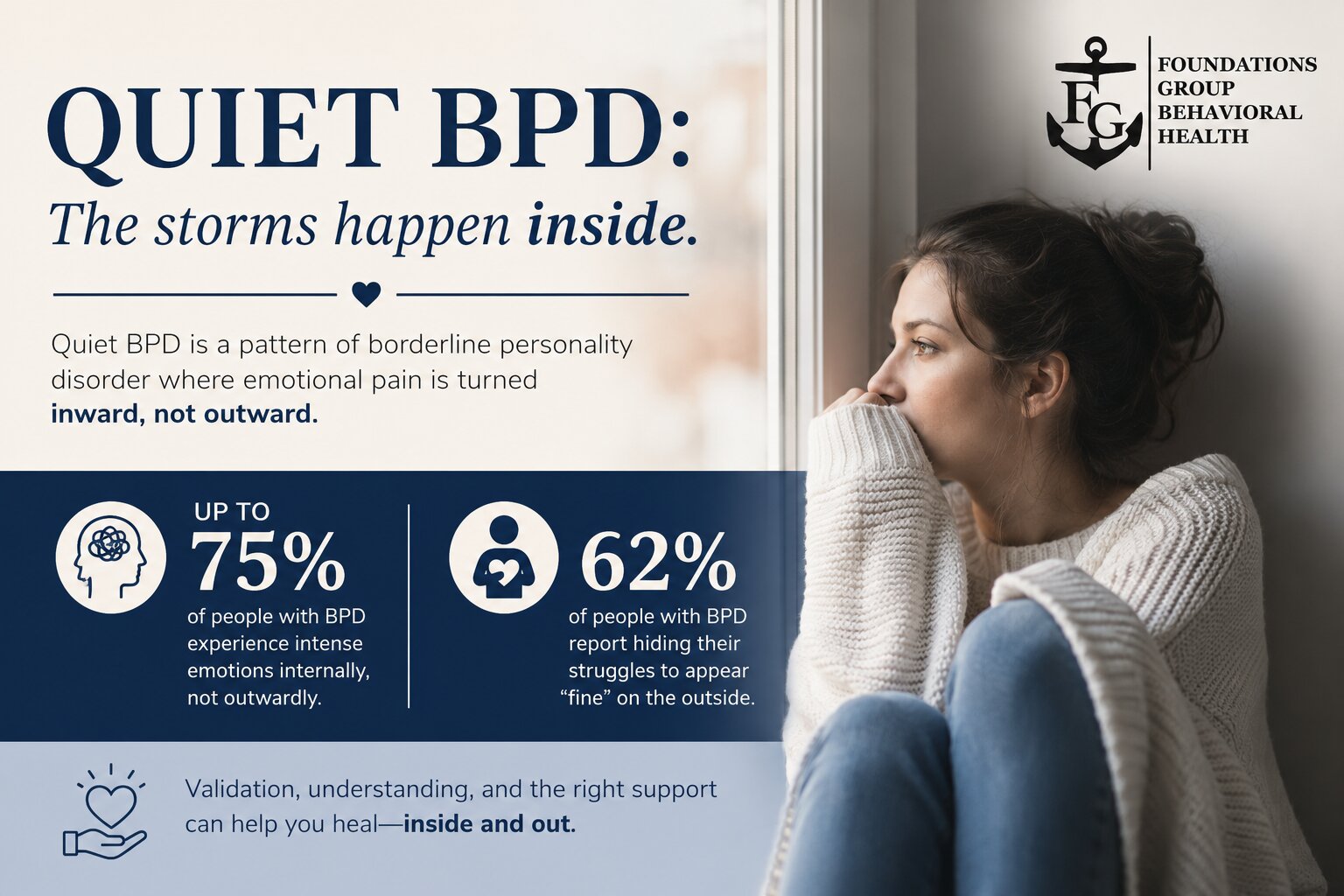
Quiet BPD, sometimes called quiet borderline personality disorder, describes a presentation of borderline personality disorder in which emotional distress is largely internalized.
The same core difficulties seen in BPD—fear of abandonment, emotional dysregulation, unstable self-image, and intense emotional pain—may still be present.
The difference is where those emotions are directed.
Instead of expressing anger toward others, someone with quiet BPD may turn it against themselves.
Instead of arguing, they may withdraw.
Instead of outward emotional outbursts, they may silently spiral into shame or self-blame.
Although “quiet BPD” isn’t recognized as a separate diagnosis in the DSM-5, many mental health professionals acknowledge that people with BPD do not all present in the same way. Recognizing these different patterns helps explain why some individuals go years without receiving an accurate diagnosis.
If you’re exploring these symptoms, personality disorder treatment can provide a comprehensive evaluation and evidence-based support.
Signs and Symptoms of Quiet BPD
The defining feature of quiet BPD symptoms isn’t less emotional pain.
It’s that much of the pain remains hidden.
Intense Internal Self-Criticism
Many people with quiet BPD describe having an inner voice that is relentlessly harsh.
After even a minor mistake, thoughts may quickly become:
- “I’m a terrible person.”
- “Everyone must hate me.”
- “I ruin everything.”
- “I don’t deserve relationships.”
Instead of expressing frustration outwardly, the criticism becomes self-directed.
Shame Spirals
Embarrassment or rejection that others might recover from relatively quickly can trigger overwhelming shame.
A misunderstood text message.
A cancelled plan.
Constructive feedback at work.
Each may lead to hours of self-blame, replaying conversations, and assuming the worst about oneself.
The emotional response often feels far larger than the situation itself.
Appearing Calm While Feeling Overwhelmed
One reason high-functioning BPD is sometimes associated with quiet BPD is that many people become skilled at masking distress.
Friends may describe them as:
- Responsible
- Thoughtful
- Successful
- Easygoing
- Calm under pressure
Meanwhile, internally they may feel emotionally exhausted, frightened, or completely overwhelmed.
The disconnect between how someone appears and how they feel can be profoundly isolating.
People-Pleasing and Fawning
Fear of abandonment often leads people with quiet BPD to prioritize other people’s needs above their own.
They may:
- Avoid conflict at all costs
- Say yes when they want to say no
- Apologize excessively
- Hide disappointment
- Constantly seek reassurance
- Worry about upsetting others
Rather than risking rejection, they may silence themselves.
Withdrawal Instead of Outbursts
In what many people think of as “classic” BPD, emotional distress may become outwardly visible through arguments or intense emotional reactions.
With quiet BPD, distress is more likely to lead to withdrawal.
Someone may:
- Stop responding to messages
- Isolate themselves
- Cancel plans
- Become emotionally distant
- Assume relationships are already damaged
To others, it may seem as though they’ve simply disappeared.
Dissociation
Periods of intense emotional stress can sometimes lead to dissociation.
People describe feeling:
- Numb
- Detached from themselves
- As though they’re observing life from outside their body
- Emotionally disconnected from reality
These experiences may be frightening, especially when someone doesn’t understand what’s happening.
Hidden Self-Harm or Suicidal Thoughts
Some individuals with quiet BPD engage in self-harm privately or experience suicidal thoughts without telling anyone.
Because emotional pain is directed inward, loved ones may have no idea how much someone is struggling.
Any thoughts of self-harm or suicide should always be taken seriously and deserve immediate professional support.
Causes and Risk Factors
Quiet BPD shares the same underlying causes and risk factors associated with borderline personality disorder more broadly.
Research suggests that several factors often interact.
Childhood Trauma
Many people with BPD have experienced difficult childhood environments.
This may include:
- Emotional neglect
- Emotional abuse
- Physical abuse
- Sexual abuse
- Chronic invalidation
- Unpredictable caregiving
For individuals with quiet BPD, emotional neglect and consistently having feelings dismissed may be especially relevant.
Children who learn that expressing emotions is unsafe sometimes begin directing those emotions inward instead.
Invalidating Environments
Growing up in environments where emotions were ignored, criticized, or punished can make it difficult to trust or express emotional experiences later in life.
Over time, emotional suppression may become automatic.
Biological Factors
Genetics, temperament, and differences in how the brain processes emotions and impulse control are also believed to contribute to the development of BPD.
No single factor causes the condition.
It is usually the result of multiple biological and environmental influences interacting over time.
Quiet BPD vs. “Classic” BPD—and Why Quiet BPD Is So Often Missed
This is where quiet BPD differs most noticeably from the presentation many people expect.
Classic BPD Often Looks External
People experiencing more outward presentations of BPD may:
- Express anger openly
- Experience visible relationship conflict
- React intensely during disagreements
- Show emotional distress that others can easily observe
These behaviors often draw attention—even when they’re misunderstood.
Quiet BPD Turns the Storm Inward
With quiet BPD, many of those same emotions remain hidden.
Instead of confronting others, someone may:
- Blame themselves
- Withdraw completely
- Internalize anger
- Appear composed while privately struggling
- Hide emotional pain until it becomes overwhelming
From the outside, everything may seem fine.
Inside, they may feel like they’re barely holding themselves together.
Why Quiet BPD Is Frequently Missed
Many people with quiet BPD spend years receiving different diagnoses before anyone recognizes the broader pattern.
Common reasons include:
- Symptoms overlap with depression or anxiety.
- Emotional pain is largely invisible to others.
- Individuals may avoid discussing abandonment fears.
- They become highly skilled at masking distress.
- Cultural stereotypes portray BPD as only outwardly explosive behavior.
As a result, someone may spend years believing they are simply “too sensitive,” “overthinking,” or failing to cope well enough.
That experience can be deeply lonely.
Recognizing quiet BPD doesn’t invalidate previous diagnoses, but it may provide a more complete explanation for long-standing emotional struggles.
How Quiet BPD Is Diagnosed
Because quiet BPD is not a separate DSM-5 diagnosis, clinicians diagnose it using the same criteria applied to borderline personality disorder.
The presentation, however, may look different.
Mental health professionals consider:
- Long-term emotional patterns
- Relationship history
- Fear of abandonment
- Self-image
- Impulsivity
- Emotional regulation
- Coping strategies
- Trauma history
Diagnosis often takes time because symptoms can resemble other conditions.
Quiet BPD may initially be mistaken for:
- Major depressive disorder
- Anxiety disorders
- Bipolar disorder
- Complex post-traumatic stress disorder (CPTSD)
An accurate diagnosis usually comes from looking at patterns over many years rather than focusing on one difficult period.
If you feel your current diagnosis doesn’t fully explain your experiences, it’s reasonable to ask about a comprehensive mental health assessment and discuss your concerns openly with a qualified clinician.
Treatment: DBT as the Gold Standard
The encouraging news is that borderline personality disorder is treatable.
For many people, symptoms improve significantly with evidence-based care.
The treatment most strongly supported by research is Dialectical Behavior Therapy (DBT).
DBT was developed specifically for individuals with borderline personality disorder and focuses on practical skills for managing overwhelming emotions.
Core DBT skills include:
Distress Tolerance
Learning how to survive emotional crises without making situations worse.
Emotional Regulation
Understanding emotions, reducing their intensity, and responding more effectively.
Mindfulness
Developing awareness of thoughts and emotions without becoming overwhelmed by them.
Interpersonal Effectiveness
Learning healthier ways to communicate needs, establish boundaries, and maintain relationships.
For people with quiet BPD, DBT can be especially valuable because it addresses the internal emotional storms that others rarely see. Rather than asking someone to simply “control their emotions,” it teaches concrete skills for recognizing, understanding, and responding to emotional pain in healthier ways.
Treatment may also include individual therapy, trauma-informed approaches when appropriate, and medication for co-occurring conditions such as anxiety or depression if clinically indicated. While medication does not treat BPD itself, it may help address specific symptoms or related mental health concerns.
Healing Is Possible—Even If No One Else Could See Your Struggle
Living with quiet BPD can be exhausting because so much of the struggle happens beneath the surface. You may have spent years appearing capable while privately questioning yourself, carrying shame, or believing that no one would understand what you were experiencing.
Those experiences are real.
They deserve to be taken seriously.
Receiving an accurate diagnosis isn’t about placing another label on yourself. It’s about understanding why you’ve struggled and finding treatments that match your needs.
If quiet BPD symptoms are affecting your relationships, work, or emotional well-being, professional support can help you build healthier coping skills and move toward lasting recovery. Personalized mental health & addiction care in Barnstable County, Falmouth, MA.
Call (888) 685-9730 or learn more about personality disorder treatment at Foundations Group Behavioral Health.
Frequently Asked Questions
What is quiet BPD?
Quiet BPD is an informal term used to describe a presentation of borderline personality disorder in which emotional distress is directed inward rather than outward. It is not an official DSM-5 subtype but reflects a pattern recognized by many clinicians and individuals with BPD.
How is quiet BPD different from regular BPD?
The underlying condition is the same. The main difference is how emotional distress is expressed. People with quiet BPD are more likely to internalize anger, shame, and fear of abandonment, while others with BPD may express those emotions more outwardly.
What is the best treatment for quiet BPD?
Dialectical Behavior Therapy (DBT) is considered the gold-standard treatment for BPD, including quiet BPD. It teaches skills for emotional regulation, distress tolerance, mindfulness, and healthier relationships. Treatment plans may also include individual therapy and support for co-occurring mental health conditions.