

Creativity and emotional intensity often grow side by side. Many people who walk into my office worry about the same thing: If I stabilize my mental health, will I lose the part of me that makes me… me?
If that thought has crossed your mind, you’re not alone. Many people exploring care options like this bipolar disorder treatment program carry the same quiet fear.
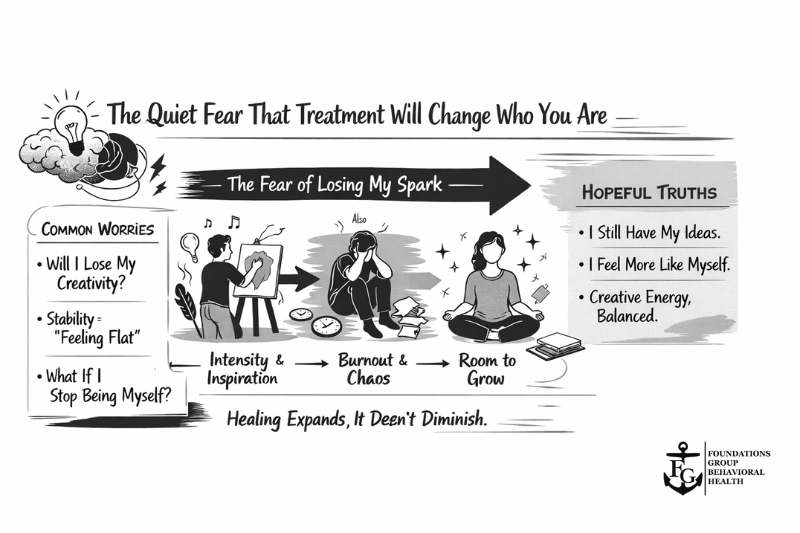
The Fear That Stability Means Becoming “Flat”
I’ve heard variations of the same sentence countless times:
“What if treatment makes me boring?”
For people who feel deeply, think creatively, or move through life with emotional intensity, the idea of stability can sound like a trade-off. Less chaos might also mean less inspiration.
But what many people discover later is something surprising:
Creativity often expands when the mind isn’t constantly fighting itself.
Why Emotional Highs Can Feel Like Creative Fuel
In moments of elevated energy or racing thoughts, ideas can come fast and feel electric. Words flow. Music happens. Art appears almost effortlessly.
It makes sense that letting go of those states can feel scary.
But what often gets overlooked is the other side of that cycle—exhaustion, burnout, lost projects, unfinished work, or long periods where creating anything feels impossible.
The goal of care isn’t to erase emotion.
It’s to make your inner world sustainable.
The Artists, Writers, and Thinkers Who Feared the Same Thing
Many people entering care worry they’ll lose their edge.
Yet again and again, people tell me something different after they begin stabilizing their mental health:
“I still have the ideas. I just have the energy to actually finish them now.”
Creativity doesn’t disappear when things become steadier.
It often becomes more usable.
Instead of bursts of brilliance followed by burnout, people find rhythm.
Creativity Needs Structure More Than We Realize
Think of creativity like electricity.
Too little energy and nothing happens.
Too much, and the system burns out.
Structure, whether that’s therapy, medication, or consistent support—acts like wiring. It channels that energy safely so it can actually power something.
Without that wiring, even the brightest spark can short-circuit.
When Mental Health Support Protects Identity
One of the biggest misconceptions about treatment is that it changes who you are.
In reality, the goal is the opposite.
The work is about helping people reconnect with parts of themselves that got buried under emotional storms, sleepless nights, impulsive decisions, or cycles that made life unpredictable.
Many people eventually say something they never expected:
“I feel more like myself than I have in years.”
You Don’t Have to Choose Between Stability and Self-Expression
The fear of losing yourself is real. It deserves respect, not dismissal.
But healing doesn’t flatten people.
More often, it gives them room to breathe.
Room to write the novel.
Room to finish the painting.
Room to keep relationships steady while still feeling deeply.
And most importantly, room to live without the constant fear of the next emotional crash.
If you’re wondering whether it’s possible to feel stable and still feel like yourself, you’re not the first person to ask that question.
Call 888-685-9730 or visit our bipolar disorder treatment program page to learn more about our behavioral health treatment programs Massachusetts, bipolar disorder treatment program Massachusetts services.