
What Is Trauma Bonding?
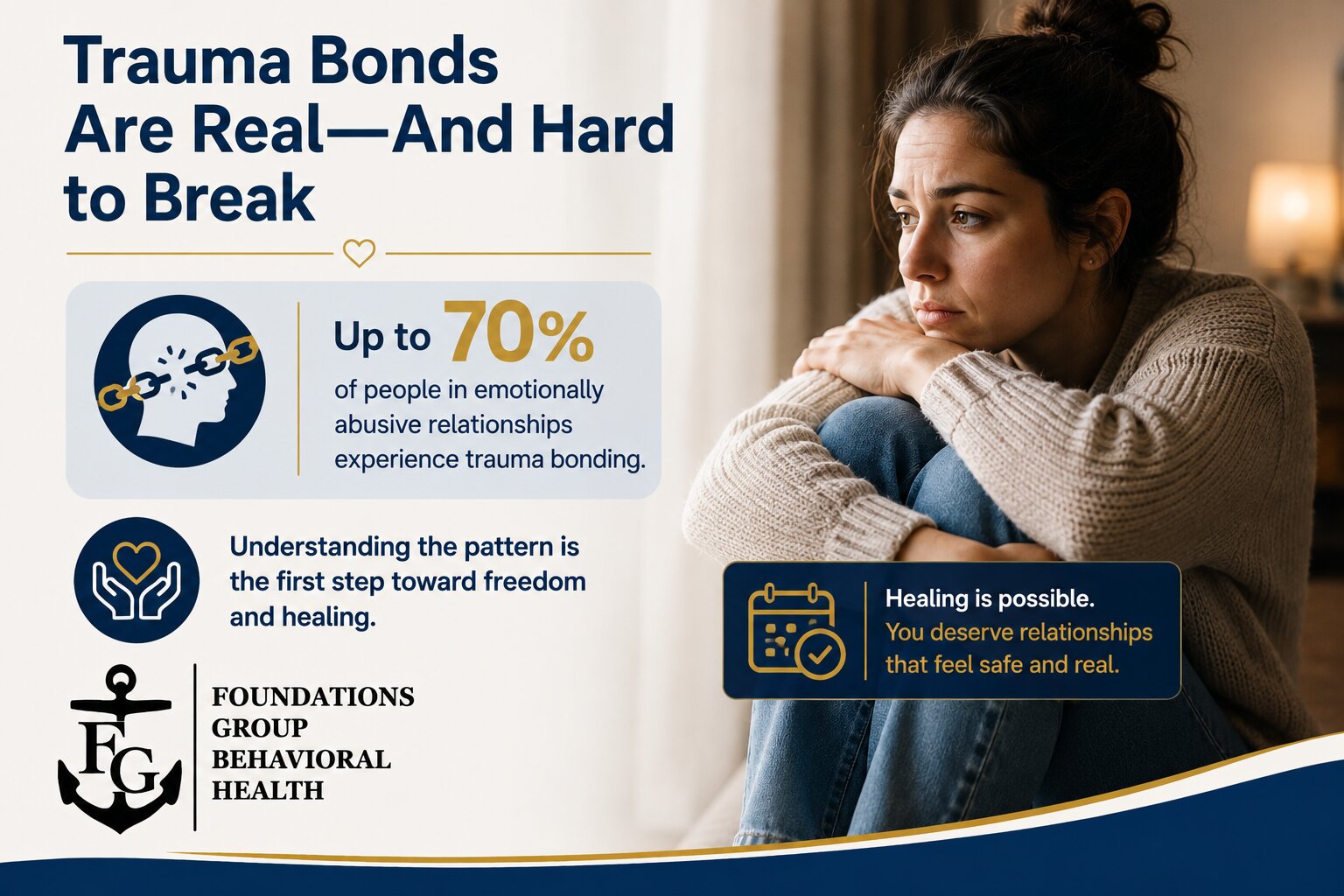
Trauma bonding is a strong psychological attachment that forms between a person and someone who is abusing or mistreating them. It develops through a specific cycle: periods of abuse or mistreatment followed by periods of warmth, affection, or relief — an unpredictable pattern that creates a powerful emotional dependency.
The term was first used by Dr. Patrick Carnes to describe the loyalty that abuse survivors often feel toward their abusers. It’s not a character flaw or a failure of judgment. It’s the predictable output of a specific psychological and neurobiological process.
Trauma bonding is different from simply loving someone who has flaws. The key feature is the cycle — abuse followed by reconciliation, tension followed by relief — and the way that cycle hijacks the brain’s reward system to create attachment that can feel indistinguishable from love.
It is also distinct from Stockholm syndrome, which specifically describes hostage situations. Trauma bonds form in ongoing relationships — romantic partnerships, parent-child relationships, religious or cult dynamics — anywhere that intermittent reinforcement and power imbalance coexist.
Why Trauma Bonds Form: The Psychology Behind Them
Understanding why trauma bonds form makes them far less mysterious — and less shameful.
Intermittent reinforcement is the core mechanism. When reward is unpredictable — sometimes the person is loving and warm, sometimes they’re cruel or cold — the brain becomes hypervigilant to the cues that predict reward. The relief of the “good” phase feels disproportionately intense compared to a consistently positive relationship, precisely because it follows fear or pain. This is the same mechanism that makes gambling addictive.
Neurobiological factors compound the effect. Abusive cycles trigger releases of cortisol (stress), adrenaline (fear/arousal), and oxytocin (bonding) in rapid succession. The brain begins to associate the abuser with both threat and comfort — two experiences that normally come from different people. This creates a confusion at the level of the nervous system that rational thinking struggles to override.
Shame, isolation, and eroded self-worth maintain the bond. Abusers typically work to separate their partners from support networks, make them feel responsible for the abuse, and undermine their sense of their own reality (gaslighting). By the time a person fully recognizes the pattern, their capacity to trust their own perceptions may be significantly compromised.
If this resonates, trauma-informed care at Foundations Group Behavioral Health can help you understand the bond and begin to heal from its effects.
The 7 Stages of Trauma Bonding
1. Love Bombing
The relationship begins with overwhelming attention, affection, and idealization. Gifts, constant contact, declarations of deep connection very early on. This phase establishes the emotional baseline the person will spend the rest of the relationship trying to return to.
2. Trust and Dependency
The intensity of the early phase creates rapid emotional dependency. The abuser becomes the primary source of validation, comfort, and identity. This is often when isolation from outside relationships and support networks begins — subtly at first.
3. Criticism Begins
Small criticisms, put-downs, or expressions of disappointment appear. They’re often framed as concern or high standards. The person begins to work harder to maintain the warmth of the early phase — which is exactly what the dynamic is designed to produce.
4. Gaslighting
The person’s perception of reality begins to be actively undermined. Events are denied. Feelings are dismissed or ridiculed. “That never happened.” “You’re too sensitive.” “You’re imagining things.” Over time, the person loses confidence in their own judgment and becomes more dependent on the abuser’s version of events.
5. Resignation
Hope of returning to the early phase fades. The person begins to accept the dynamic as normal, or as their fault. Leaving starts to feel impossible — practically, emotionally, or both.
6. Loss of Self
The person’s sense of identity, interests, relationships, and self-worth have been significantly eroded. They may no longer recognize themselves. The abuser has become the organizing center of their life.
7. Addiction to the Cycle
The neurobiological pattern is now deeply ingrained. The person craves the relief of the “good” phase in a way that resembles addiction. Even after leaving, they may experience withdrawal-like symptoms — profound longing, idealization of the abuser, an urge to return.
Signs You May Be in a Trauma Bond
- You make excuses for your partner’s harmful behavior to yourself and others
- You feel unable to leave even when you want to — or even after you’ve tried
- You feel responsible for their emotions, wellbeing, or behavior
- You experience intense fear of abandonment specifically by this person
- The “good” periods feel like profound relief rather than simply happiness
- You’ve returned to the relationship multiple times after leaving
- Your sense of self outside this relationship has significantly diminished
- Friends or family have expressed concern that you minimize or rationalize
Who Is Most Vulnerable to Trauma Bonding?
Anyone can develop a trauma bond — but certain experiences increase vulnerability:
- Childhood trauma — particularly emotional neglect, abuse, or having a caregiver who was both a source of fear and comfort (disorganized attachment)
- Prior abusive relationships — the pattern feels familiar; familiar can feel like home
- Isolation from support networks — fewer people to reflect reality back or offer alternatives
- Low self-worth or fear of abandonment — makes the threat of losing the relationship feel catastrophic
- Histories of people-pleasing or conflict avoidance — makes it harder to recognize or name the dynamic
Understanding the patterns that created vulnerability is an important part of healing. For more on how early family experiences shape these patterns, see our post on Generational Trauma: What It Is and How It Affects You.
Trauma Bonding vs. Love: How to Tell the Difference
This is the question most people in trauma bonds struggle with — because the bond genuinely feels like love. Some useful distinctions:
- Love feels safe at baseline. A trauma bond feels like relief after fear — the emotional register is completely different.
- Love allows you to be yourself. A trauma bond requires constant self-monitoring to manage the other person’s reactions.
- Love doesn’t require you to walk on eggshells. If you’re constantly calibrating your behavior to avoid triggering anger, withdrawal, or punishment, that’s not a dynamic love creates.
- Love doesn’t make you smaller over time. Trauma bonds typically involve a progressive erosion of identity, interests, and outside relationships.
How to Break a Trauma Bond
Breaking a trauma bond is not a matter of willpower. The bond operates at a neurobiological level — trying to think your way out of it is like trying to think your way out of an addiction. What actually works:
Going no-contact is typically necessary, and it’s also typically the hardest part. Even after leaving, the pull to reconnect can be overwhelming — particularly in the early weeks. Having a plan for this period (who to call, what to do with the urge, where to go if needed) matters enormously.
Therapy is the most important long-term intervention. Approaches that work well for trauma bonding include:
- Trauma-focused CBT — addressing the thought patterns that maintained the bond
- EMDR — processing the traumatic memories that underlie the attachment
- DBT — building emotional regulation and distress tolerance skills
- Somatic therapy — working with the nervous system’s stored responses directly
Rebuilding identity outside the relationship is a crucial and often underemphasized part of recovery. Reconnecting with interests, friendships, and a sense of self that existed before the relationship — or building one for the first time.
Support groups — both in-person and online — provide connection with others who understand the pattern, which is particularly valuable when the bond involved isolation from existing support networks.
Frequently Asked Questions
Can you trauma bond with a parent or family member?
Yes. Trauma bonds can form in any relationship where there is a power imbalance and an intermittent pattern of fear and comfort. Parent-child relationships are one of the most common contexts — particularly when a caregiver was both frightening and the child’s primary source of safety. These bonds are often the foundation for similar patterns in adult relationships.
How long does it take to break a trauma bond?
There’s no fixed timeline. Factors that affect recovery include the duration and intensity of the relationship, the person’s history and support system, and whether they’re engaged in consistent therapeutic support. Most people find the first several months after leaving the hardest. With support, meaningful recovery is achievable — though it’s rarely linear.
Is trauma bonding the same as codependency?
They overlap but aren’t the same thing. Codependency is a relational pattern characterized by excessive caretaking, people-pleasing, and difficulty with boundaries — it can exist in relationships that aren’t abusive. Trauma bonding specifically involves an attachment to someone who is causing harm, maintained by the intermittent reinforcement cycle. Codependency can be a vulnerability factor for trauma bonding.
Can therapy help me leave a trauma bond?
Yes — and it’s often essential. Therapy helps you understand the mechanism of the bond, process the underlying trauma that created vulnerability to it, and build the self-trust and emotional regulation needed to leave and stay gone. It also helps address the grief that comes with leaving, which is real even when the relationship was harmful.
You Don’t Have to Figure This Out Alone
Breaking a trauma bond takes more than willpower — it takes support, understanding, and time. If you recognize this pattern in your life, reaching out for help is not a sign of weakness. It’s the most important step you can take. Personalized mental health & addiction care in Barnstable County, Falmouth, MA.
Foundations Group Behavioral Health’s trauma-informed clinicians can help you understand the bond, process what happened, and begin to build something different. Learn about our trauma treatment program or talk to someone on our team today. You can also call us at (888) 685-9730.