

The moment a doctor says bipolar disorder, the room can feel strangely quiet.
For many people, the first thought isn’t relief—it’s fear. Fear about medication. Fear about losing control. Fear that life just became something different.
If you’ve recently been diagnosed, it’s normal to feel unsure about what comes next. Many people begin exploring care through a bipolar disorder treatment program in Massachusetts because having support during this early stage can make the path forward feel clearer and less overwhelming.
The First Few Days Can Feel Like Too Much Information
After a diagnosis, there’s often a flood of new terms, suggestions, and decisions.
Medication might come up quickly. Therapy may be recommended. You may hear about structured care options that involve meeting several days each week.
It can feel like you’re being asked to make big decisions before you’ve even processed what’s happening.
That reaction is completely human. A diagnosis isn’t a finish line—it’s the beginning of understanding what your mind has been trying to tell you.
The Fear Around Medication Is Very Real
One of the most common concerns people share with us sounds like this:
“What if medication changes who I am?”
People worry about feeling numb, flat, or disconnected from themselves. Some fear losing creativity or emotional depth.
Good care doesn’t dismiss those concerns.
Instead, the conversation becomes collaborative. The goal isn’t to erase your personality—it’s to help stabilize the extremes that make life unpredictable and exhausting.
Medication decisions also rarely happen all at once. They evolve, adjust, and refine over time.
You remain part of the process.
Treatment Often Focuses on Stability First
When someone is newly diagnosed, the first goal is usually simple: stability.
Mood swings—especially the intense highs and lows associated with bipolar disorder—can make daily life feel chaotic. Structured support helps create a steadier rhythm.
This may include:
- Consistent therapy sessions
- Medication guidance from psychiatric providers
- Group support with others facing similar challenges
- Multi-day weekly treatment schedules that provide accountability and structure
Instead of navigating everything alone, people begin rebuilding stability with support around them.
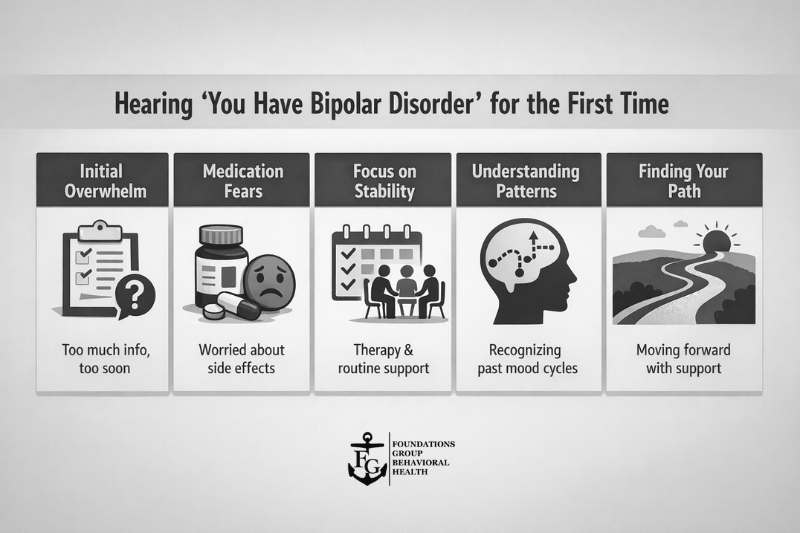
Many People Discover They’ve Been Carrying This for Years
A diagnosis can also bring a surprising realization.
Many people look back and recognize patterns they never understood before—periods of high energy, racing thoughts, impulsive decisions, followed by deep crashes or long stretches of exhaustion.
What once felt confusing starts to make sense.
That clarity can be powerful. When you can finally name something, you can also start learning how to manage it.
Treatment Is Not About “Fixing” You
One of the most important things people discover in care is this:
You are not broken.
Bipolar disorder doesn’t erase your identity, intelligence, creativity, or goals. It simply means your brain regulates mood differently—and that difference sometimes needs support.
Treatment focuses on helping you build a life that feels steadier, safer, and more predictable.
Many people continue careers, relationships, education, and passions while managing bipolar disorder successfully.
The Early Days Are Often the Hardest
The beginning can feel uncertain.
You may question the diagnosis. You may hesitate about medication. You may wonder whether things will ever feel “normal” again.
Those doubts are part of the process.
But something important happens once support begins: the fear usually gets replaced with understanding. Then understanding turns into confidence.
Little by little, life becomes manageable again.
You Don’t Have to Navigate This Alone
If you or someone you love has recently been diagnosed, having guidance can make a meaningful difference. Support, structure, and compassionate care are available through our behavioral health treatment programs Massachusetts and bipolar disorder treatment program Massachusetts.
Call 888-685-9730 or visit our bipolar disorder treatment page to learn more about our behavioral health treatment programs Massachusetts, bipolar disorder treatment program services in Massachusetts.