

You prepared yourself for cravings. For mood swings. Maybe even for setbacks.
What you might not have prepared for is this: they stopped using… and they still seem deeply depressed.
As a clinician, I want to gently normalize something that feels frightening to watch. When someone stops using substances, their mood does not automatically reset. In fact, for many people, depression becomes more visible in early recovery.
And that doesn’t mean recovery is failing.
It means there’s another layer that deserves care.
If you’re trying to understand what that care looks like, learning how a structured depression treatment program supports mood stabilization can help you make sense of what’s happening.
Why Depression Often Becomes Clearer in Early Recovery
Substances don’t just create euphoria. They regulate emotion — artificially.
Alcohol can dull anxiety. Stimulants can temporarily lift low mood. Opioids can soften emotional pain. Even marijuana can mute intrusive thoughts for some people.
Over time, the brain adapts to these external chemicals. Natural mood regulation systems slow down because the substance is doing the work.
When the substance stops, the nervous system is left exposed.
This can look like:
- Sudden emotional flatness
- Tearfulness that seems to come out of nowhere
- Irritability over small things
- Sleep that feels broken or excessive
- Loss of interest in things they once cared about
It’s not dramatic. It’s heavy.
Many partners tell me, “I thought things would feel lighter by now.”
That expectation makes sense. But mood repair takes longer than detox.
Sobriety Removes the Numbing — Not the Underlying Pain
Substances often serve as emotional anesthesia.
They quiet trauma memories.
They dampen shame.
They soften loneliness.
When that anesthesia is removed, untreated depression can surge forward.
Imagine someone carrying a heavy backpack for years. The substances were the straps holding it up. When those straps snap, the weight doesn’t disappear. It drops.
Recovery requires addressing both the substance use and the mood disorder underneath.
Without treating depression directly, people are at higher risk of relapse — not because they lack willpower, but because they’re trying to survive emotional pain without tools.
How Structured Daytime Treatment Stabilizes Mood
Mood stabilization is not about “cheering someone up.”
It’s about restoring rhythm to a dysregulated brain.
Structured daytime care or multi-day weekly treatment programs provide consistency during a period when everything feels unstable.
Here’s what that structure supports:
1. Sleep-Wake Regulation
Depression and early sobriety both disrupt sleep. A consistent daily schedule helps reset circadian rhythms, which directly impact mood stability.
2. Medication Oversight
If antidepressants or mood stabilizers are prescribed, close psychiatric monitoring matters. Doses may need adjustment as the body recalibrates post-substance use.
3. Therapy That Targets Both Conditions
When mental health and substance use collide, therapy must address both. Cognitive patterns, shame cycles, and emotional avoidance are explored in a safe, structured way.
4. Nervous System Regulation
Group therapy, skill-building sessions, and guided processing help reduce isolation and rebuild emotional tolerance.
5. Accountability Without Punishment
Consistency builds stability. Showing up regularly helps the brain relearn predictability.
Mood doesn’t stabilize because someone tries harder.
It stabilizes because the environment supports healing.
Why “Just Give It Time” Isn’t Always Enough
Time helps — but time alone isn’t treatment.
If depression lingers beyond the initial detox period, intensifies, or includes hopeless statements like “I don’t see the point,” it deserves direct attention.
Warning signs that additional support may be needed:
- Persistent loss of interest in everything
- Ongoing suicidal thoughts
- Extreme fatigue that interferes with daily functioning
- Relapse triggered by emotional pain
- Withdrawing from both recovery supports and loved ones
A dedicated depression treatment program provides layered support: therapy, psychiatric care, structured routine, and relapse prevention planning all in one place.
It reduces the risk of bouncing between crisis and short-term stabilization.
The Emotional Toll on You
Loving someone who is both sober and depressed is confusing.
You may feel:
- Relief that the substance use has slowed
- Fear that the depression feels just as dangerous
- Guilt for feeling tired
- Frustration when progress feels slow
- Loyalty that keeps you holding on
All of those feelings can exist at once.
Many partners quietly ask themselves,
“Is this what recovery is going to feel like forever?”
The answer is no.
But early and untreated depression can make it feel that way.
You are allowed to need support, too.
What You Can Do (Without Becoming Their Clinician)
It’s easy to slide into caretaker mode.
But your role is partner — not psychiatrist, not therapist, not crisis manager.
Here are grounded ways to help:
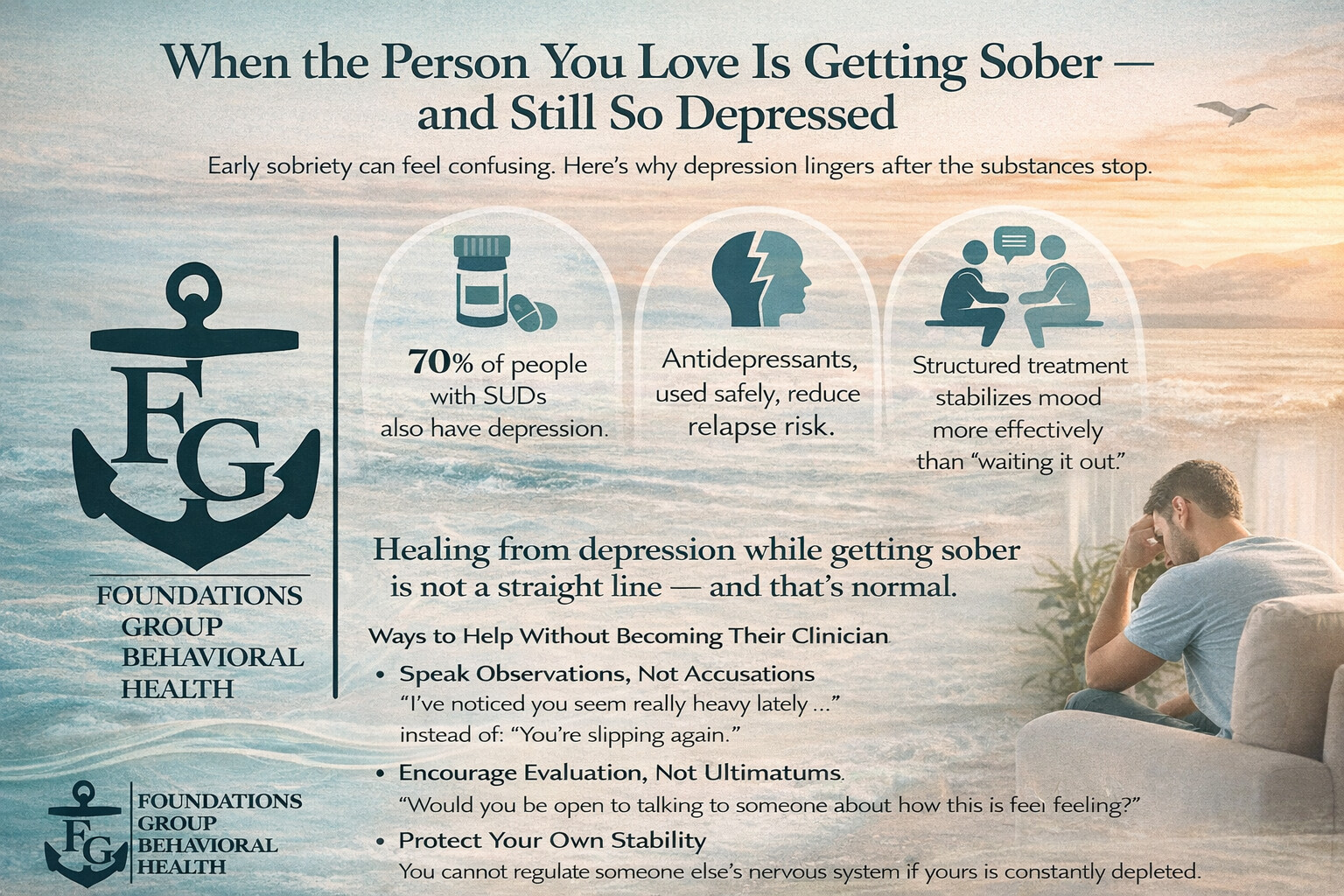
Speak Observations, Not Accusations
“I’ve noticed you seem really heavy lately.”
Instead of: “You’re slipping again.”
Encourage Evaluation, Not Ultimatums
“Would you be open to talking to someone about how this is feeling?”
Protect Your Own Stability
You cannot regulate someone else’s nervous system if yours is constantly depleted.
Avoid Becoming the Only Support
Depression shrinks a person’s world. Treatment expands it again.
You are allowed to love them without absorbing all of it.
What Real Mood Stabilization Looks Like
It’s gradual.
It might look like:
- Getting out of bed more consistently
- Laughing once during a group session
- Re-engaging with small routines
- Expressing emotion instead of shutting down
- Talking about the future — even cautiously
Healing is rarely dramatic.
It’s quiet. Repetitive. Steady.
And when depression is treated alongside recovery, relapse risk decreases significantly. People gain tools to tolerate discomfort instead of escaping it.
There is a version of your partner that feels steadier than this. Treatment helps them access it.
FAQ: When Depression and Recovery Overlap
Is it normal to feel more depressed after getting sober?
Yes. Early sobriety can temporarily intensify depressive symptoms because the brain is adjusting to the absence of substances. However, if symptoms persist or worsen, additional mental health support may be necessary.
How do I know if this is “just early recovery” or clinical depression?
Duration and severity matter. If low mood lasts several weeks, interferes with daily functioning, or includes suicidal thoughts, it’s more than an adjustment phase. A psychiatric evaluation can clarify.
Can antidepressants be used safely in recovery?
In many cases, yes. When prescribed and monitored appropriately, antidepressants can support recovery by stabilizing mood. Medication decisions should always involve a licensed provider familiar with co-occurring conditions.
Will treating depression reduce relapse risk?
Strongly, yes. Untreated depression increases relapse vulnerability because substances often function as emotional coping tools. Addressing mood directly strengthens long-term recovery.
What if my partner refuses treatment?
You cannot force readiness. You can:
- Express concern clearly and calmly
- Set boundaries around your own well-being
- Seek support for yourself
- Keep the door open for future help
Change often happens in stages.
Is this going to last forever?
Depression in recovery is treatable. With consistent care, most individuals experience meaningful improvement in mood, energy, and engagement.
It may take time — but it does not have to define the rest of their life.
If you’re watching someone you love struggle with both sobriety and depression, you are not overreacting. This intersection is real, and it requires real support. Personalized mental health & addiction care in Barnstable County.
Call 888-685-9730 or visit our Depression treatment program services to learn more about our Depression treatment program services in Falmouth, MA.