
I thought getting help meant admitting I couldn’t handle life.
What it actually meant was admitting I was tired of pretending I could.
When I first looked into a depression treatment program, I felt like I was crossing some invisible line. Like I was officially “the struggling one.” The weird one. The friend who couldn’t just push through.
If you’re young and trying to get sober, or just trying to get your mental health together while everyone else seems fine, I get it. It feels isolating.
Here’s what I didn’t expect.
1. I Wasn’t the Only “Young One”
I walked in assuming I’d be surrounded by people twice my age.
Instead, there were other 20-somethings who also looked put-together on Instagram but felt like they were unraveling inside. College students. Young professionals. People who were “supposed” to be in their prime.
Depression doesn’t check your birth year before showing up.
Seeing other young people take their mental health seriously made me realize I wasn’t dramatic. I was proactive.
2. It Wasn’t All Intense or Heavy
I imagined nonstop crying, dark rooms, and uncomfortable silence.
Yes, there were emotional conversations. Yes, people shared hard things.
But there was also laughter. Inside jokes. Sarcasm about how our brains work. That weird bonding that happens when people are honest at the same time.
It wasn’t misery camp. It was structured daytime care designed to help people stabilize, learn, and reset.
And honestly? That balance made it feel safer.
3. No One Asked Me to Prove I Was “Bad Enough”
I kept thinking, What if I’m not sick enough for this?
Depression has a way of minimizing itself. It whispers, “Other people have it worse.”
But no one ranked pain. No one compared stories like they were competing.
You don’t have to be unable to get out of bed every day to deserve help. You don’t have to hit some dramatic low point.
If your life feels smaller than it should, that’s enough.
4. Hearing Other People’s Stories Broke My Isolation
There’s something surreal about hearing someone describe the exact thought you’ve been ashamed to say out loud.
“I wake up already tired of being alive.”
“I feel like everyone else got a manual for adulthood.”
“I look fine, but I’m exhausted from pretending.”
It was like someone turned subtitles on for my brain.
That moment — when you realize you’re not uniquely broken — is powerful. It cracks the loneliness open.
5. The Structure Helped More Than Motivation Ever Did
I kept waiting to “feel ready.”
The truth? I rarely did.
What helped wasn’t a burst of inspiration. It was consistency. Showing up multiple days a week. Having a schedule. Knowing what the day would include.
When your brain feels chaotic, structure can feel like a railing on a steep staircase. You still have to walk down — but you’re not free-falling.
6. I Didn’t Lose My Personality
This one scared me the most.
I was afraid I’d come out flat. Boring. Less funny. Less creative. Less me.
Depression had become so woven into my identity that I didn’t know who I’d be without it.
But no one tried to sand down my edges. No one told me who to become.
If anything, I felt clearer. Like wiping fog off a mirror. Same person — just less distorted.
You don’t disappear when you get support. You get steadier.
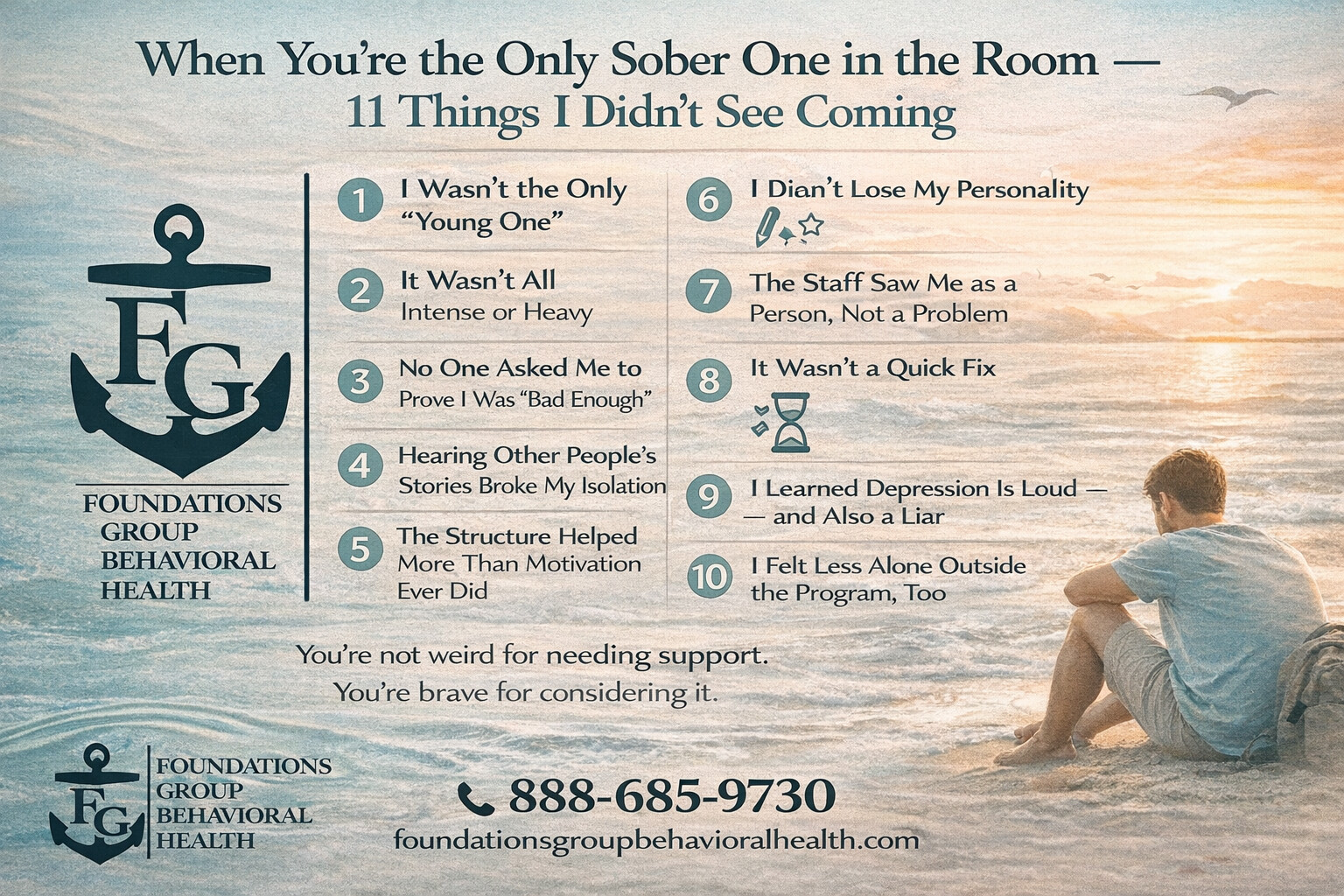
7. The Staff Saw Me as a Person, Not a Problem
I wasn’t treated like a diagnosis.
I was asked about my goals. My stress. My relationships. My sleep. My habits. My fears.
The conversations were human.
That matters when you already feel like something is “wrong” with you.
Being treated like a whole person — not a case file — lowered my defenses in a way I didn’t expect.
8. It Wasn’t a Quick Fix
I wish I could say everything changed overnight.
It didn’t.
Some days still felt heavy. Some mornings were still hard.
But I had tools. Language. Context. A plan.
Instead of spiraling alone at 2 a.m., I had coping strategies I had practiced in real time.
Healing didn’t look like fireworks. It looked like gradual steadiness.
9. I Learned Depression Is Loud — and Also a Liar
Depression told me:
- You’re behind in life.
- Everyone else is managing better.
- You’re too much.
- You’re not enough.
- You’re the weird one.
Sitting in a room full of people who believed those exact same things exposed how distorted those thoughts were.
When multiple intelligent, capable people share the same self-doubt, you start questioning the narrative.
And that’s where change begins.
10. I Felt Less Alone Outside the Program, Too
This surprised me.
I thought support would only exist inside those walls.
Instead, I started feeling more grounded in everyday life. More willing to text a friend honestly. More open to saying, “I’m having a rough week.”
The isolation shrank.
And when you’re young and sober — or just young and actively working on your mental health — shrinking that isolation is everything.
11. I Didn’t Leave “Cured.” I Left Capable.
There’s a difference.
Cured sounds passive. Like something that happens to you.
Capable feels active. Like something you participate in.
I didn’t walk out invincible. I walked out equipped.
That felt more realistic. And more empowering.
FAQ: What Young Adults Often Wonder (But Don’t Always Ask)
Will I be the youngest person there?
Not necessarily. Many programs serve young adults navigating school, early careers, relationships, and identity shifts. You’re not unusual for needing support in your 20s.
What if I’m functioning “fine” on the outside?
High-functioning depression is real. You can go to work, post online, and still feel empty or overwhelmed inside.
Support isn’t reserved for people in crisis. It’s for people who are struggling — even quietly.
Do I have to share everything right away?
No.
You’re allowed to open up at your own pace. Some days you might talk more. Some days you might just listen. Growth doesn’t require performing vulnerability.
Will this label me forever?
Getting help doesn’t stamp your identity.
It’s not a life sentence. It’s a season of focused support.
If anything, learning how to manage depression early can give you more control over your future — not less.
How long does it take to feel better?
It varies.
Some people feel relief quickly once they have structure and support. For others, it’s gradual.
Progress often looks like:
- More consistent sleep
- Less extreme mood swings
- Clearer thinking
- Feeling less alone
It’s rarely dramatic. It’s usually steady.
What if I’m nervous to call?
That’s normal.
Most people feel awkward making that first call. You don’t need a speech. You don’t need to know all the right words.
You can just say, “I’m not sure where to start, but I think I need help.”
That’s enough.
If you’re tired of feeling like the only sober one in the room — or the only one quietly battling your own mind — you don’t have to keep doing this alone.
You can learn more about your options through our Depression treatment program services. No pressure. Just clarity. Personalized mental health & addiction care in Barnstable County, Falmouth, MA.
Call 888-685-9730 or visit our page to explore next steps. You’re not weird for needing support.
You’re brave for considering it.