

It can feel confusing and deeply unsettling to watch your child sleep for hours, withdraw from life, and still seem completely drained. You may find yourself asking quiet questions you don’t say out loud: Is this depression? Is this something more? Am I missing something?
If your young adult is in early recovery—or trying to be—what you’re seeing may not be failure. It may be the beginning of something fragile and important.
In areas like Barnstable County, Massachusetts, many families are navigating this same uncertainty, often without clear guidance on what early depression recovery actually looks like.
Why Depression Doesn’t Always Look Like Sadness
One of the hardest parts for parents is this: depression doesn’t always show up in obvious ways.
Instead of tears or visible distress, you might notice:
- Long stretches of sleep with little energy afterward
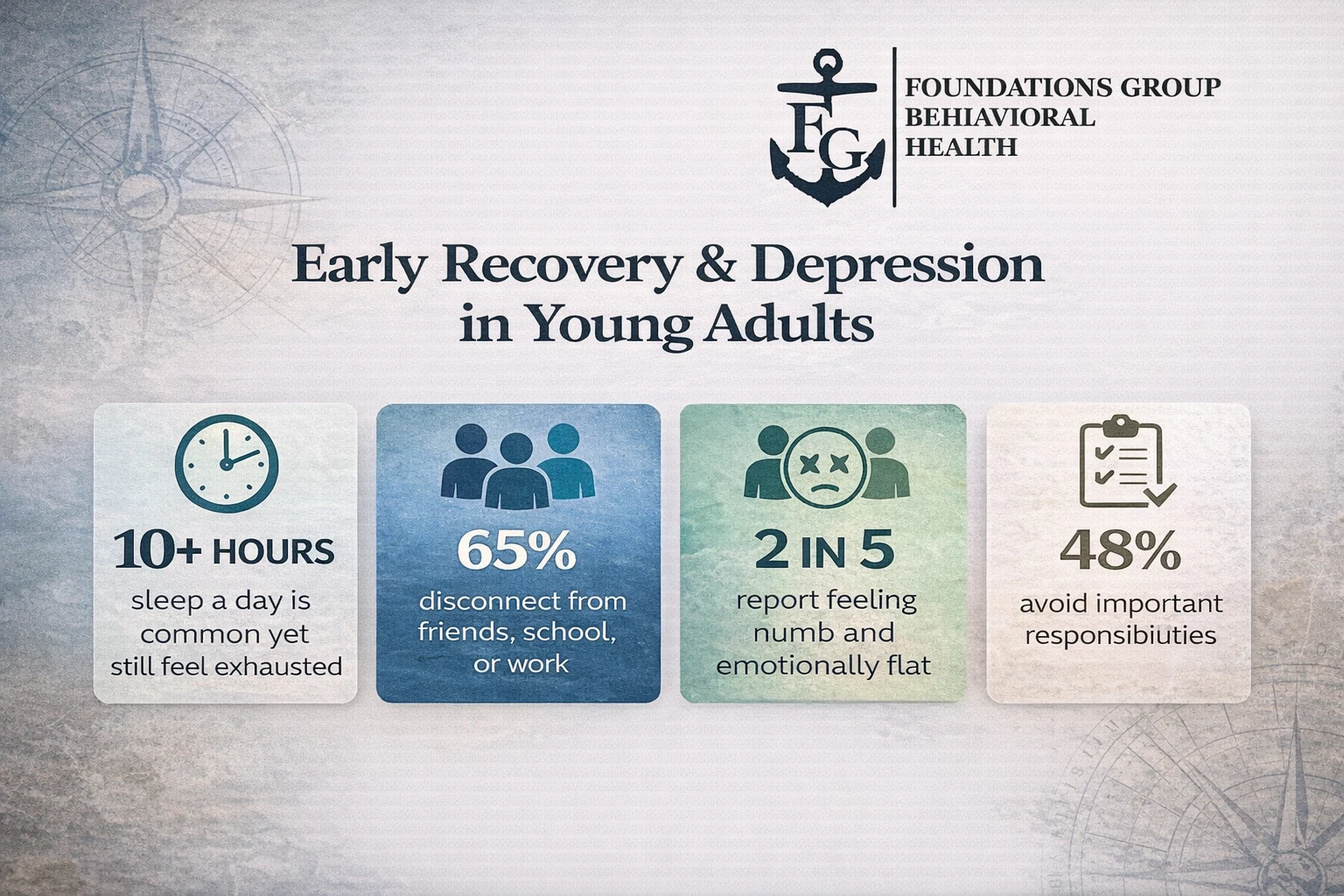
- Disinterest in friends, school, or work
- A flat tone or distant presence
- Less communication, fewer emotions
It can feel like your child is slowly pulling away from life.
This isn’t a lack of effort. It’s often a form of emotional protection. When the mind becomes overwhelmed, it sometimes shuts things down to survive.
The Confusing Mix of Numbness and Exhaustion
Many young adults describe a very specific feeling in early recovery—they feel numb and tired at the same time.
That combination can be difficult to understand from the outside.
You might see someone who:
- Sleeps 10–12 hours and still feels exhausted
- Struggles to focus or complete simple tasks
- Says “I don’t feel anything” or avoids emotional conversations
- Seems disconnected from both joy and stress
This isn’t laziness. It’s often the nervous system recalibrating after being stretched too far for too long.
For parents, it can feel like nothing is working. But this stage is often part of the process—not a sign that recovery isn’t possible.
What Early Recovery Can Look Like (Even If It Feels Slow)
Recovery from depression—especially in young adults—is rarely dramatic. It doesn’t usually start with motivation or clarity.
It starts small.
Early treatment often focuses on rebuilding basic stability:
- Establishing a daily rhythm
- Reintroducing structure into the week
- Creating safe spaces for emotional expression
- Reducing isolation through gentle connection
Some young adults participate in structured daytime care several days a week. Others begin with therapy and gradually increase support.
The goal isn’t to push them back into life all at once.
It’s to help them re-enter slowly, in a way that feels manageable.
Why Progress Can Be Easy to Miss
One of the most painful parts of this experience is how invisible progress can be.
You may be hoping to see your child “come back” quickly. Instead, you might see small, almost unnoticeable shifts.
Progress can look like:
- Getting out of bed 30 minutes earlier
- Attending a therapy session without resistance
- Making brief eye contact
- Expressing even a small emotion
These moments may not feel like enough.
But in early recovery, they matter more than they seem.
Think of it like thawing frozen ground. Nothing appears to change at first—but something underneath is slowly softening.
The Role of Structured Support
At a certain point, many families realize that support at home, while loving and important, may not be enough on its own.
This is where more structured care can help.
For young adults, this might include:
- Multi-day weekly treatment that provides consistency
- Individual therapy to process deeper emotional patterns
- Group sessions that reduce the feeling of being alone
- Medication support when symptoms interfere with functioning
If you’re exploring options, you can learn more about depression treatment services that are designed to meet young adults where they are—without overwhelming them.
In communities like Falmouth, Massachusetts, access to structured care can make a meaningful difference in helping young adults reconnect with themselves over time.
Supporting Your Child Without Losing Yourself
As a parent, it’s natural to want to fix this. To say the right thing. To find the one solution that brings them back.
But this kind of healing doesn’t respond to pressure.
What helps more is steadiness.
You might try:
- Sitting with them, even in silence
- Letting conversations be short if that’s all they can manage
- Avoiding constant problem-solving
- Setting gentle boundaries to protect your own energy
You are allowed to feel tired, too.
Supporting your child doesn’t mean carrying everything alone.
When It May Be Time to Take the Next Step
There’s no perfect moment to seek additional help. But there are signs that more support could be beneficial.
You might consider it if your child:
- Sleeps excessively but still feels drained
- Has little to no daily structure
- Avoids most responsibilities or interactions
- Seems emotionally flat or unreachable
Reaching out doesn’t mean something is “wrong enough.”
It means you’re choosing not to wait until things get worse.
A Gentle Reframe for What You’re Seeing
It may not look like progress.
It may not feel like recovery.
But what you’re witnessing could be the very early stages of healing—quiet, slow, and easy to overlook.
Your child may not have the words yet. They may not have the energy yet.
But that doesn’t mean nothing is happening.
Sometimes, the most important changes are the ones you can’t see right away.
FAQs: What Parents Often Wonder in This Stage
Is it normal for my child to sleep this much and still feel exhausted?
Yes, it can be. Depression often disrupts both the quality and regulation of sleep. Even long hours of rest may not feel restorative. This can improve with the right support and structure over time.
How do I know if this is depression or something else?
It’s not always clear from the outside. What matters most is the pattern—withdrawal, low energy, emotional disconnection, and difficulty functioning. A professional assessment can help clarify what’s going on and what kind of support is appropriate.
Should I push them to be more active?
Gentle encouragement can help, but pushing too hard can backfire. Early recovery often requires a balance between small expectations and emotional safety.
What if they don’t want help?
This is very common. Resistance doesn’t always mean refusal—it can mean fear, overwhelm, or uncertainty. Keeping the conversation open and pressure low can make a difference over time.
How long does early recovery usually take?
It varies. Some young adults begin to feel shifts within weeks, while for others it takes longer. Progress is rarely linear, but consistent support can help create forward movement.
Am I doing something wrong as a parent?
No. Many parents in this situation feel this way, but depression is not caused by a lack of love or effort. Your concern and presence already matter more than you may realize.
If you’re ready to explore what support could look like for your child, call 888-685-9730 to learn more about our Depression treatment services in Cape Cod, MA.