

I didn’t think I’d end up back there.
Not after everything I had already done. Not after the progress, the effort, the days that felt like real forward movement. I told myself I had crossed that line—that whatever I went through before was behind me.
But the truth is, I never crashed.
I just slowly drifted.
And if you’re here, there’s a chance you know exactly what I mean.
Early on, I even caught myself revisiting options like depression treatment services—not because everything had fallen apart, but because something inside me didn’t feel right anymore.
I Learned How to Look Okay
That was the part nobody warned me about.
After going through treatment once, you learn how to function again. You rebuild routines. You show up. You become someone people don’t worry about as much.
And that’s a good thing—until it isn’t.
Because I got really good at looking okay.
I knew how to answer, “I’m good.”
I knew how to keep conversations light.
I knew how to avoid the deeper questions.
But underneath that, something was slipping.
Not dramatically. Not all at once.
Just enough to make everything feel slightly off.
The Slow Fade No One Talks About
There wasn’t a breaking point.
It was more like a slow dimming.
Things I used to care about started to feel optional. Then exhausting. Then distant. I didn’t stop showing up—I just stopped being present when I did.
There’s a specific kind of loneliness in that space.
You’re still in the room. Still part of the conversation. Still living your life.
But it feels like you’re watching it happen from a few steps back.
I remember thinking, “This isn’t bad enough to count.”
But it was.
The Lie That Kept Me Stuck
“I’m still functioning.”
That thought carried me longer than it should have.
Because technically, it was true. I was doing the things I needed to do. Nothing was visibly falling apart.
But functioning isn’t the same as living.
It’s maintenance. It’s survival. It’s checking boxes without feeling connected to any of them.
And the longer I stayed there, the heavier everything started to feel.
The Shame Hit Harder the Second Time
The first time I got help, there was almost a sense of urgency. It was clear something needed to change.
The second time?
It felt quieter. And honestly, more complicated.
Because now there was this voice in my head saying,
“You already did this. Why are you back here?”
That kind of shame doesn’t yell. It whispers. It makes you question whether you’re allowed to need help again.
I didn’t want to start over.
But eventually, I realized something important:
I wasn’t starting over. I was returning to something that had helped me before—this time with more awareness.
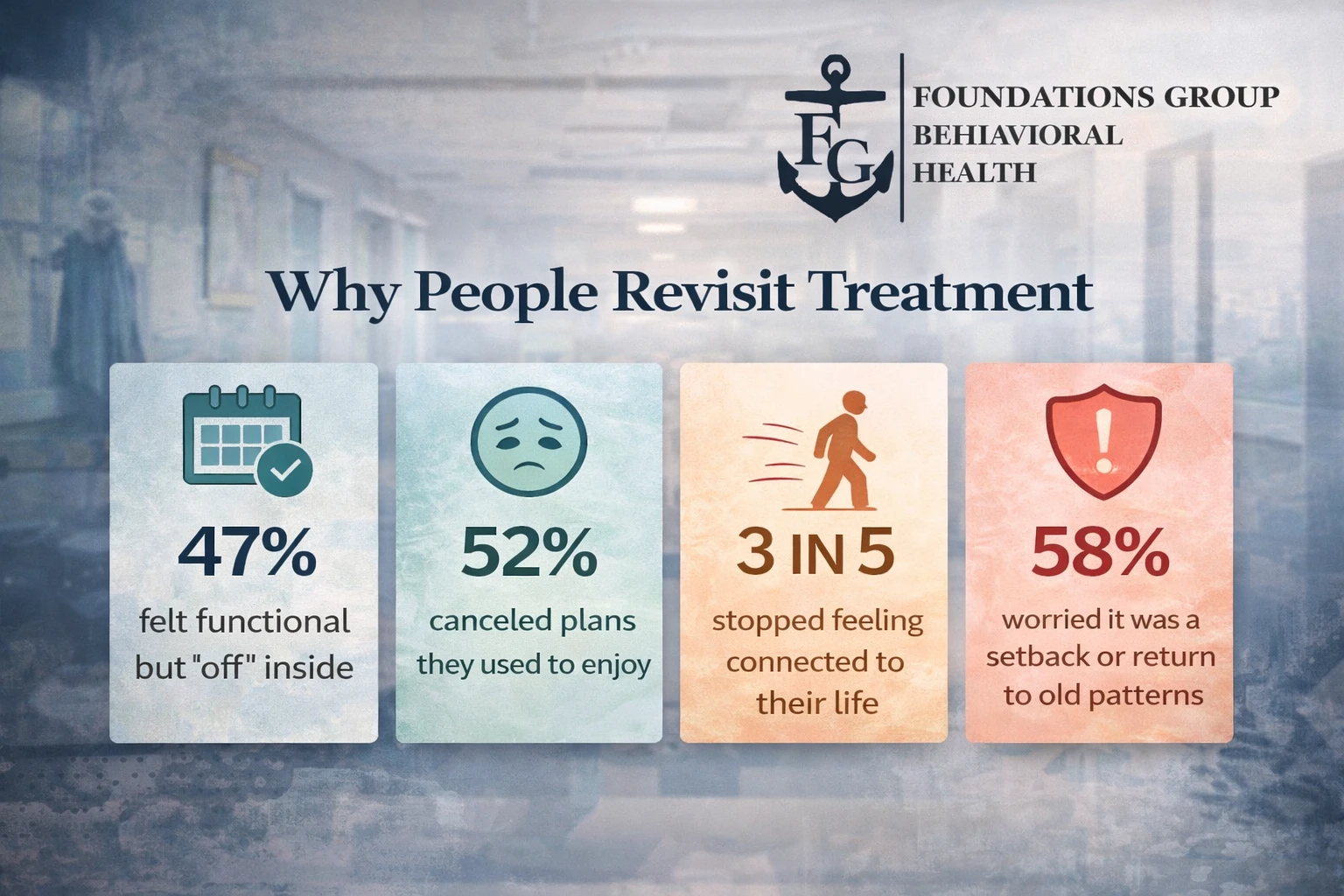
What Finally Made Me Pay Attention
It wasn’t one moment.
It was a pattern I couldn’t ignore anymore.
- I was canceling things I used to enjoy
- Conversations felt like effort instead of connection
- I was sleeping more, but never feeling rested
- Everything felt… muted
That word stuck with me.
Muted.
Like life had lost its color but kept its responsibilities.
At some point, I stopped asking, “Is this serious enough?”
And started asking, “Is this sustainable?”
The answer was no.
Going Back Didn’t Feel Like Failure
It felt like resistance at first.
Like I was admitting something I didn’t want to admit.
But once I made the decision, something shifted.
I didn’t have to pretend anymore.
I stepped back into structured support—not because I had no other option, but because I didn’t want to keep carrying everything alone.
In places like Barnstable County, Massachusetts, I started to see how many people quietly return to care—not as a step backward, but as part of staying well.
That changed how I saw it.
This Time, I Let Myself Be Honest
The first time I went through treatment, I was just trying to survive.
This time, I was ready to understand.
I spoke more openly. I didn’t filter as much. I paid attention to the patterns I had missed before.
And I gave myself permission to not have it all figured out.
That mattered more than anything.
What Support Looked Like the Second Time Around
It wasn’t about intensity.
It was about consistency.
I found a rhythm in multi-day weekly care that gave me space to reset without stepping away from my entire life.
There was something grounding about having a place to go where I didn’t have to explain everything from scratch.
If you’ve ever searched for something like depression IOP Massachusetts, you probably know that feeling of uncertainty—wondering what it’ll actually be like, if it’ll help, if it’s worth it.
What I can tell you is this:
It didn’t fix everything overnight.
But it gave me a place to start being real again.
The Difference Between Then and Now
The biggest shift wasn’t external.
It was internal.
I stopped measuring my progress by how “normal” I looked and started paying attention to how I actually felt.
Some days were still heavy.
Some days still are.
But I don’t ignore the signs anymore.
I don’t wait until everything falls apart.
I respond sooner. Softer. More honestly.
If You’re Still Showing Up But Struggling Inside
I see you.
Because I was you.
You might be holding it together well enough that no one is asking questions. You might even be convincing yourself it’s not that bad.
But something brought you here.
Something in you knows that just getting through the day isn’t the same as actually being okay.
You don’t have to wait for it to get worse.
You don’t have to prove how bad it is.
You’re allowed to take that feeling seriously now.
You’re Not Behind—You’re Paying Attention
That’s the part I wish I understood sooner.
Going back for help didn’t erase anything I had done before.
It built on it.
It gave me another layer of understanding. Another chance to do things differently.
Another opportunity to show up for myself in a way I couldn’t before.
And that’s not failure.
That’s growth.
A Quiet Truth Most People Don’t Say Out Loud
Sometimes the strongest thing you can do isn’t pushing through.
It’s pausing.
It’s admitting something feels off before it turns into something unmanageable.
It’s choosing support even when you technically could keep going without it.
That’s what this was for me.
Not a breakdown.
A decision.
FAQs: For Anyone Thinking About Going Back
Is it normal to need treatment again after doing well before?
Yes. More common than people admit. Healing isn’t a straight line, and returning for support can be part of maintaining progress—not losing it.
How do I know if I really need help again?
If you’re asking the question, it’s worth exploring. You don’t need to be in crisis. Feeling off, disconnected, or consistently low is enough to check in.
What if I feel embarrassed about going back?
That feeling is real—but it doesn’t mean you shouldn’t go. Many people carry that same hesitation. It usually fades once you’re back in a space where you feel understood.
Will it be the same experience as before?
Not necessarily. You’re different now. What you take from it—and how you engage—can change the entire experience.
What if I don’t feel “bad enough” yet?
You don’t have to wait until things get worse. Early support can make a big difference and often prevents deeper setbacks.
Can I balance treatment with my daily life?
Yes. Many options are designed to fit into your routine, allowing you to get support while still maintaining responsibilities.
If you’re ready to explore what support could look like for your child, call 888-685-9730 to learn more about our Depression treatment services in Cape Cod, MA.