

You still answer texts. You still make deadlines. You still show up to family dinners and say, “I’m just tired,” when someone asks how you’re doing.
Most people probably believe you.
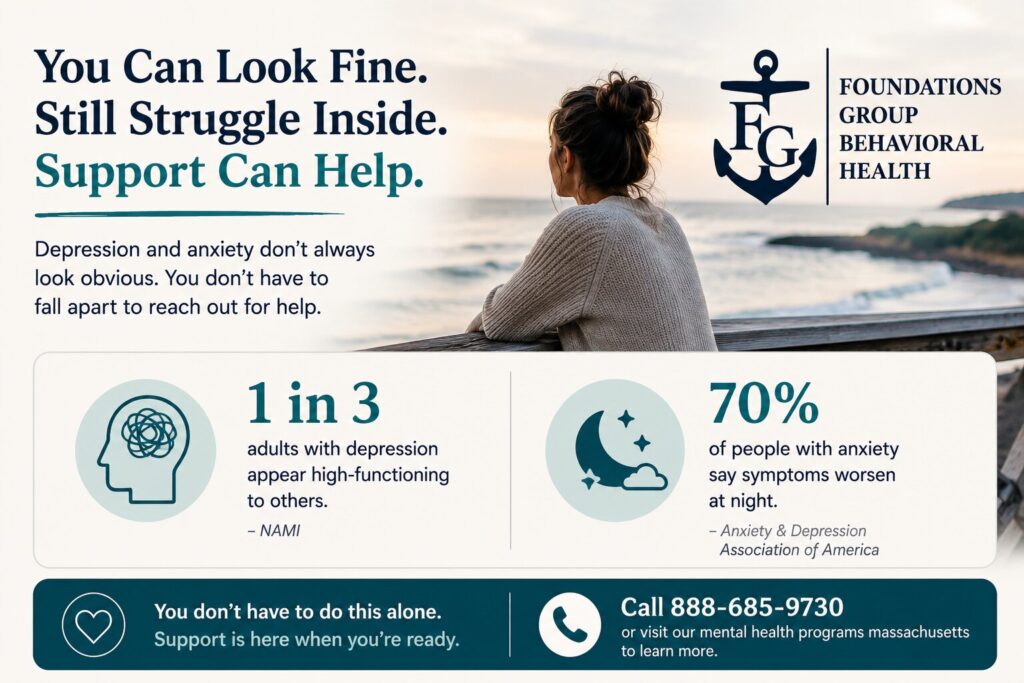
The strange thing about depression and anxiety is that they can hide inside a very functional-looking life. Especially for adults who are used to being dependable. Especially for people who’ve built entire identities around holding everything together.
And after a while, that pressure starts to feel less like strength and more like survival.
For many people searching for support near Cape Cod, the decision to seek help doesn’t happen because life completely falls apart. It happens because they realize they can’t keep living emotionally numb, mentally exhausted, or constantly overwhelmed while pretending everything is okay. Learning more about a structured outpatient mental health program can be the first honest step toward feeling like yourself again.
Looking “Fine” Can Become Its Own Kind of Trap
One of the hardest parts about high-functioning depression and anxiety is how easy it is for other people to miss.
You keep going to work. You pay bills. You smile at the right moments. Maybe you even succeed professionally while privately unraveling.
People often assume that if someone is still functioning, things can’t really be that bad.
But functioning and coping are not the same thing.
A lot of adults quietly living with depression describe the same experience: life starts feeling mechanical. You move through routines because you have to, not because you feel connected to them anymore.
Anxiety can make things even harder. Your brain rarely stops moving. Every decision feels heavier than it should. Rest doesn’t feel restful because your mind keeps running in the background like a motor that never fully shuts off.
You become tired in a deeper way. The kind of tiredness that vacations don’t fix.
And because you’re still “handling things,” people may not realize how much energy it takes just to get through an ordinary day.
High-Functioning People Often Wait Too Long to Reach Out
There’s a common belief that treatment is only for people in complete crisis.
That belief keeps a lot of people stuck.
Many adults struggling with anxiety and depression tell themselves things like:
- “Other people have it worse.”
- “I should be able to handle this.”
- “I’m still getting things done.”
- “Maybe I’m just burned out.”
- “I don’t want to overreact.”
But emotional pain doesn’t have to become catastrophic before it deserves attention.
Sometimes the warning signs are quieter:
- Feeling emotionally disconnected from people you love
- Crying more often in private
- Constant irritability or mental exhaustion
- Trouble concentrating
- Pulling away socially
- Feeling numb instead of sad
- Dreading the next day before the current one even ends
The difficult part is that high-functioning adults often normalize these symptoms for years.
They adapt to suffering instead of addressing it.
Anxiety Has a Way of Making Everyday Life Feel Heavy
People who haven’t experienced chronic anxiety sometimes imagine it as nervousness or occasional panic.
For many adults, it feels more like carrying invisible weight everywhere you go.
You replay conversations long after they happen. You worry about disappointing people. You overthink small mistakes until they feel enormous. Even relaxing can feel uncomfortable because your brain keeps searching for the next problem.
Depression can add another layer entirely.
Simple things begin feeling strangely difficult. Returning a phone call. Folding laundry. Making dinner. Answering an email.
Not impossible. Just emotionally expensive.
That combination of anxiety and depression often creates a frustrating cycle. Anxiety keeps your mind overstimulated. Depression drains your energy. Together, they can leave people feeling trapped between exhaustion and restlessness.
Like your body wants sleep while your mind refuses to stop moving.
There’s a Difference Between Independence and Isolation
A lot of high-functioning adults pride themselves on handling things alone.
Maybe you learned early that vulnerability made people uncomfortable. Maybe other people depend on you financially or emotionally. Maybe asking for help simply feels unfamiliar.
So you keep pushing through.
But isolation has a way of quietly intensifying depression and anxiety.
At first, it can look harmless. You cancel plans because you’re tired. You stop returning calls. You spend more time alone because social interaction feels draining.
Then slowly, your world gets smaller.
The hardest part is that isolation often feels safer in the moment. You don’t have to explain yourself. You don’t have to pretend you’re okay in front of other people.
But over time, emotional isolation can deepen the very symptoms you’re trying to escape.
That’s why structured support matters for many people. Not because they’re incapable, but because healing usually happens in connection—not in secrecy.
Getting Help Doesn’t Mean Your Life Is Falling Apart
One reason people hesitate to seek treatment is fear of what it means.
There’s fear around labels. Fear around judgment. Fear that asking for help somehow confirms failure.
For professionals, parents, caregivers, or high-achieving adults, there can also be fear of losing control over daily life.
But many outpatient mental health programs are specifically designed for people who still need to maintain responsibilities while receiving support.
That middle ground matters.
Not everyone needs round-the-clock care. Some people need structured, consistent therapy several days a week while continuing to work, parent, or stay engaged with home life.
For people exploring IOP mental health Cape Cod options, this kind of care can provide a balance between independence and meaningful support.
And honestly, many people feel relief once they stop trying to carry everything alone.
The Goal Isn’t to Become a Different Person
One fear people rarely say out loud is this:
“What if treatment changes who I am?”
Especially for high-functioning adults, depression and anxiety can become strangely intertwined with identity. You get used to being the productive one. The responsible one. The person who always pushes through.
The idea of slowing down can feel uncomfortable.
But good mental health care isn’t about erasing your personality or flattening your emotions.
It’s about helping you function without constantly operating in survival mode.
It’s about being able to experience calm without guilt.
To rest without panic.
To wake up without immediately feeling overwhelmed by the day ahead.
To reconnect with parts of yourself that existed before exhaustion took over.
Sometimes the Breaking Point Is Quiet
Movies tend to portray mental health crises dramatically.
Real life is usually quieter.
Sometimes the breaking point looks like sitting in your car for ten extra minutes before work because you can’t emotionally transition into another day.
Sometimes it looks like crying from relief after someone simply asks, “Are you actually okay?”
Sometimes it’s realizing you haven’t genuinely felt present in months.
That quiet realization matters.
You do not need to hit rock bottom to deserve support.
You do not need to completely stop functioning before reaching out.
And you don’t need to prove your pain to anyone for it to be real.
What Structured Mental Health Support Can Offer
For adults dealing with anxiety and depression, structured outpatient care can offer something many people haven’t felt in a long time: consistency.
Not pressure. Not punishment. Not losing your independence.
Consistency.
That may include:
- Individual therapy
- Group support with people facing similar struggles
- Coping skill development
- Emotional processing
- Psychiatric support if needed
- Accountability without shame
- A more stable daily rhythm
Many people near Cape Cod searching for help are not looking for their lives to completely stop.
They’re looking for enough support to finally breathe again.
And sometimes that starts with simply talking to someone who understands that high-functioning pain is still pain.
FAQ About Depression and Anxiety Treatment Near Cape Cod
How do I know if I need more support for depression or anxiety?
If your symptoms are interfering with your ability to feel present, rested, emotionally connected, or stable, it may be time to explore additional support. You do not need to wait until things become unbearable to seek help.
Can I still work while attending treatment?
Many outpatient mental health programs are designed for adults who are balancing work, school, or family responsibilities. Schedules are often structured to allow people to continue managing important parts of daily life while receiving care.
What if I’m nervous about group therapy?
That’s extremely common. Many people feel uncomfortable about group therapy before starting. Over time, though, hearing other people describe emotions you’ve been privately carrying can reduce isolation in a powerful way.
Is outpatient treatment only for severe mental illness?
No. Structured mental health care supports people across many levels of need. Some individuals seek help because symptoms have become overwhelming, while others reach out earlier because they recognize they’re struggling to cope alone.
Can anxiety and depression happen at the same time?
Yes. Anxiety and depression frequently overlap. Some people feel emotionally drained and numb while also experiencing racing thoughts, panic, restlessness, or constant worry.
What makes high-functioning depression difficult to recognize?
People with high-functioning depression often continue meeting responsibilities outwardly while struggling internally. Because they still appear capable, their symptoms may go unnoticed by others for long periods of time.
How long does outpatient mental health treatment usually last?
Treatment length varies depending on the person, their symptoms, and their goals. Some people benefit from shorter-term support, while others need more ongoing care and structure.
What if I’ve tried therapy before and it didn’t help?
A previous frustrating experience doesn’t mean support can’t help now. Different therapists, treatment structures, and levels of care can create very different experiences. Many people find success after trying a more structured approach.
You are allowed to stop pretending you’re okay just because you’ve gotten good at functioning while overwhelmed.
If depression and anxiety have quietly taken over more of your life than you want to admit, support exists—and it doesn’t require you to completely fall apart first.
Call 888-685-9730 or visit our mental health programs Massachusetts to learn more about our mental health programs Massachusetts, outpatient mental health program services in Barnstable County, MA.