

You make it through meetings. You answer texts. You smile when you need to.
Then nighttime comes, and everything you held in during the day finally catches up to you.
Maybe you cry in bed after everyone else is asleep. Maybe you sit in your car for an extra ten minutes before going inside because you can’t emotionally switch into “home mode.” Maybe you don’t even cry anymore. You just feel flat. Distant. Quiet in a way that doesn’t feel peaceful.
If you left treatment early, stopped showing up, or slowly drifted away from support, you are not the only person who has done that.
A lot of people disappear when they’re struggling.
And a lot of people think disappearing means they can’t come back.
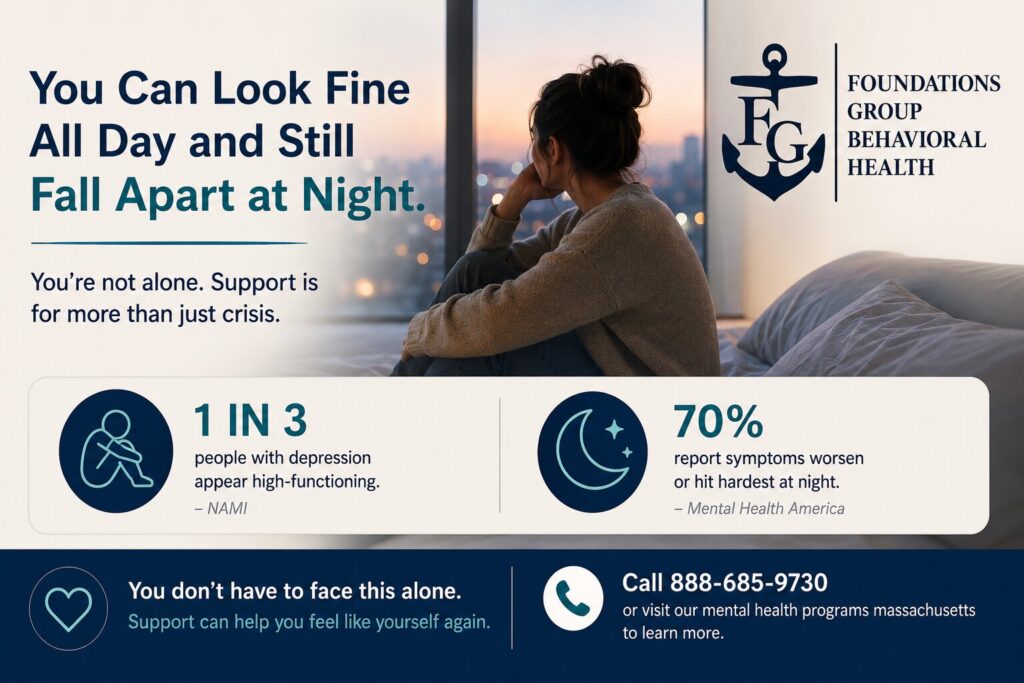
But support is not only for people in total crisis. Sometimes it’s for the person who looks functional during the day and quietly falls apart at night. Learning more about a structured outpatient mental health program can be a way to reconnect with support before things become even heavier.
Stop Measuring Your Pain by How Productive You Still Are
One of the biggest reasons people delay returning to treatment is because they’re still technically functioning.
You still go to work. You still answer emails. Maybe your performance hasn’t even changed much on the outside.
So your brain starts negotiating with your suffering.
You tell yourself:
- “If I were really struggling, I wouldn’t still be working.”
- “Other people have it worse.”
- “I’m just tired.”
- “I already tried getting help.”
But emotional pain doesn’t disappear simply because you’re productive.
A lot of people living with depression become experts at surviving while disconnected from themselves. They learn how to move through the day automatically. They perform routines they no longer feel emotionally connected to.
And after a while, functioning starts looking less like living and more like maintenance.
There’s a difference between:
“I’m managing my life.”
And:
“I’m barely holding myself together quietly enough that nobody notices.”
Pay Attention to What Happens Once You’re Alone
During the day, distractions can temporarily protect you from your own thoughts.
Work gives your brain structure. Responsibilities create momentum. Conversations force you to stay engaged even when you feel emotionally exhausted.
Then nighttime arrives.
And suddenly the feelings you pushed aside all day become impossible to ignore.
That’s when many people experience:
- Crying unexpectedly
- Emotional crashes after work
- Panic or dread before bed
- Racing thoughts
- Feeling emotionally empty
- A heavy sense of hopelessness
- Fear about waking up and doing it all again tomorrow
Sometimes depression feels loud.
Other times, it feels like silence that stretches too long.
Like sitting in a dark room emotionally, even while your life keeps moving around you.
That kind of pain deserves attention too.
Leaving Treatment Doesn’t Mean You Failed
Many people quietly disappear from treatment programs.
Some stop answering calls. Some miss a few sessions and feel too embarrassed to return. Some convince themselves they should be able to handle things alone after leaving.
This happens far more often than people realize.
Depression itself can make consistent treatment difficult. Anxiety can make group settings feel overwhelming. Shame can make every missed appointment feel enormous.
Once someone falls behind, their brain often fills in the blanks:
- “They probably think I don’t care.”
- “I wasted everyone’s time.”
- “I should’ve done better.”
- “It would be awkward to come back now.”
But treatment providers understand that mental health recovery is rarely linear.
People pause treatment. People withdraw. People come back after weeks or months away.
And many people return carrying something important they didn’t have before: honesty.
Sometimes the first round of treatment is spent trying to appear okay.
The second time, people are often more willing to admit how much they’ve actually been hurting.
Learn to Recognize Emotional Shutdown
Not everyone with depression looks devastated.
Some people just slowly disappear from themselves.
You stop caring about things you used to enjoy. Conversations feel harder to stay present in. Music doesn’t land emotionally anymore. You feel detached from your own life, like you’re observing it instead of participating in it.
Numbness is easy to minimize because it doesn’t always look dramatic.
But numbness is not emotional wellness.
It’s often what happens when your brain and body have been overwhelmed for too long.
People searching for how to function with depression are often trying to survive while emotionally disconnected at the same time.
That combination is exhausting.
It can make even simple tasks feel strangely heavy:
- Showering
- Returning messages
- Grocery shopping
- Making decisions
- Getting out of bed on difficult mornings
Not impossible.
Just heavy in a way other people may not fully see.
Stop Waiting for a Bigger Crisis Before Reaching Out
A lot of people think they need to completely fall apart before they deserve help again.
So they wait.
They wait until work performance drops. Until relationships become strained. Until panic attacks increase. Until isolation deepens.
But early support matters.
Returning to treatment is not something you earn by suffering “enough.”
You are allowed to seek support because you’re tired. Because you’re overwhelmed. Because pretending you’re okay is becoming harder to maintain.
You do not need to hit rock bottom to need care.
In fact, one of the healthiest things a person can do is ask for support before everything collapses.
Start Smaller Than Your Depression Is Telling You To
Depression has a way of making every next step feel impossible.
Your brain turns small tasks into mountains.
That’s why many people never return to support—they imagine they need to immediately solve everything all at once.
You don’t.
Sometimes healing begins with very small actions:
- Replying to one message
- Asking about program options
- Admitting to someone you’re struggling again
- Scheduling one consultation
- Reading about support without committing yet
Small steps still count.
Especially when your mind feels heavy.
One of the most damaging lies depression tells people is:
“If you can’t fix everything, don’t do anything.”
That mindset keeps people isolated far longer than they need to be.
Understand That High-Functioning Depression Is Still Depression
People often assume depression always looks obvious.
But many adults continue working, parenting, caregiving, or maintaining responsibilities while privately struggling every single day.
They may even look successful from the outside.
Meanwhile, internally:
- They feel emotionally exhausted
- They dread mornings
- They cry in private
- They struggle to experience joy
- They feel disconnected from people they love
- They move through life in survival mode
Because they’re still functioning outwardly, they often invalidate their own pain.
But being high-functioning does not mean you’re healthy.
It may simply mean you’ve gotten very good at hiding how overwhelmed you are.
Like carrying a backpack full of bricks so long that you forget other people aren’t carrying one too.
Returning to Support Can Feel Different the Second Time
A lot of people fear going back because they think it means “starting over.”
Usually, it doesn’t.
You already know things now that you didn’t know before:
- What avoidance looks like for you
- How isolation affects your mental health
- What emotional shutdown feels like
- Which coping strategies helped and which didn’t
- How quickly exhaustion builds when you carry everything alone
That self-awareness matters.
Sometimes returning to structured daytime care or multi-day weekly treatment after stepping away actually creates deeper progress because you’re no longer pretending you’re unaffected.
You’ve seen what happens when you try to muscle through depression alone.
That knowledge can create openness that wasn’t there before.
You Are Allowed to Come Back Without Explaining Everything Perfectly
A lot of people avoid reconnecting with support because they think they need the “right” explanation.
You don’t.
You don’t need a polished story.
You don’t need to justify why you left.
You don’t need to prove your pain.
Sometimes the most honest sentence is simply:
“I think I need help again.”
That’s enough.
More than enough.
Signs It Might Be Time to Reach Back Out
You may benefit from more support if:
- You cry regularly once you’re alone
- You feel emotionally numb most days
- Work feels mentally exhausting even if you still perform well
- You’ve isolated yourself from people you care about
- Everyday tasks feel heavier than usual
- You stopped treatment but still think about returning
- You constantly tell yourself to “just get through the week”
- You feel disconnected from yourself or your life
- Rest no longer feels restorative
- You spend most of your energy pretending you’re okay
None of these make you weak.
They may simply mean your nervous system has been carrying more than it can sustain alone.
FAQ About Returning to Mental Health Treatment
Is it common for people to leave treatment and come back later?
Yes. Many people step away from treatment at some point and later return. Mental health recovery is rarely linear, and needing additional support does not mean treatment failed.
What if I feel embarrassed about disappearing from treatment?
That feeling is extremely common. Many people avoid reconnecting because shame tells them they disappointed everyone. In reality, treatment providers understand that depression, anxiety, and overwhelm can affect consistency.
Can I return to treatment even if things are not “that bad”?
Absolutely. You do not need to wait for a major crisis before seeking support. Many people benefit from care long before things become unmanageable.
What if I’m still working and functioning?
Many people struggling with depression continue functioning outwardly while suffering internally. Being productive does not cancel out emotional pain.
Why do I cry more at night?
Nighttime often removes distractions and external structure. Once the day slows down, emotions that were suppressed during work or responsibilities may become more noticeable.
What if I feel numb instead of sad?
Emotional numbness can still be a symptom of depression or emotional exhaustion. Many people experience disconnection, emptiness, or emotional flatness instead of intense sadness.
Is going back to treatment considered starting over?
Not necessarily. Many people return with greater self-awareness and a better understanding of what they need. Returning can be part of progress, not proof of failure.
What if I don’t know exactly what kind of help I need?
That’s okay. You do not need to have everything figured out before reaching out. Sometimes the first step is simply talking to someone about what you’ve been experiencing.
You are allowed to need support more than once.
You are allowed to come back after disappearing.
And you are absolutely allowed to stop carrying all of this by yourself.
Call 888-685-9730 or visit our mental health programs Massachusetts to learn more about our mental health programs Massachusetts, outpatient mental health program services in Falmouth, MA.