

Some parents describe it the same way.
Their child wakes up already overwhelmed.
Before breakfast. Before class. Before work. Before anything has even gone wrong.
Maybe they hear pacing upstairs. Maybe their child walks into the kitchen looking pale and exhausted. Maybe they say they feel sick, anxious, or like they “can’t do today.” Some young adults become irritable immediately. Others go quiet. Others cry and don’t fully understand why.
As a parent, it can feel confusing and heartbreaking to watch.
Especially when you can tell the fear is real, but you don’t fully understand where it’s coming from.
If your child wakes up every morning with dread or a racing heart, you are not overreacting by taking it seriously. Those moments may be signs of an overwhelmed nervous system, chronic anxiety, emotional burnout, or deeper mental health struggles that deserve attention and care.
Learning more about support for anxiety and emotional overwhelm can help families better understand what may actually be happening beneath those difficult mornings.
Anxiety Often Feels Physical Before It Feels Emotional
One of the most confusing parts of anxiety—especially for parents—is how physical it can become.
Young adults struggling with anxiety frequently describe:
- A racing heartbeat
- Tightness in the chest
- Sweating
- Nausea
- Dizziness
- Shaking
- Shortness of breath
- A heavy feeling of dread
Parents sometimes assume these symptoms must have a medical explanation because they look so intense physically.
But anxiety does not only live in thoughts. It lives in the nervous system too.
For some people, mornings become especially difficult because the body naturally releases stress hormones shortly after waking up. If someone is already emotionally overwhelmed, that surge can feel like panic before the day even begins.
That’s part of why so many people search for answers related to morning anxiety causes. They are trying to understand why fear shows up before anything has even happened yet.
Your Child May Not Know How to Explain What They’re Feeling
Parents often ask:
“What exactly are they anxious about?”
Sometimes there is a clear answer. School pressure. Social stress. Fear about the future. Relationship problems. Academic burnout.
But many young adults genuinely struggle to explain their anxiety clearly.
That can feel frustrating for families.
You may hear things like:
- “I don’t know.”
- “I just feel awful.”
- “I can’t calm down.”
- “I feel like something bad is about to happen.”
- “I don’t even know why I’m crying.”
Anxiety is not always logical or easy to verbalize.
Sometimes the brain and body become stuck in a constant state of alertness, almost like an alarm system that no longer knows how to shut off properly.
Imagine trying to start every day while your internal emergency alarm is already ringing.
That level of stress becomes exhausting over time.
And eventually, many young adults stop fearing the day itself and start fearing the feeling of waking up.
Morning Dread Can Slowly Change a Young Person’s Entire Life
What starts as difficult mornings can eventually affect nearly every area of life.
A young adult may begin:
- Avoiding school or work
- Pulling away socially
- Sleeping irregularly
- Isolating in their room
- Becoming emotionally reactive
- Losing confidence in themselves
- Feeling hopeless about the future
This often creates tension within families.
Parents may feel confused because their child still has potential, intelligence, talent, or opportunities. From the outside, it may look like they simply are not trying hard enough.
But anxiety can quietly drain enormous amounts of emotional energy.
Many struggling young adults are fighting a battle nobody else fully sees before the day has even started.
That kind of chronic emotional strain changes people over time.
High-Functioning Anxiety Is Easy to Miss
Not every young adult with severe anxiety looks visibly distressed all the time.
Some continue functioning outwardly while privately struggling every morning.
They still attend classes. Still go to work. Still socialize occasionally. Still appear “fine enough” to most people around them.
Meanwhile internally:
- Their thoughts race constantly
- Their body stays tense all day
- They dread simple responsibilities
- They feel emotionally exhausted
- They struggle to relax even at home
- Sleep no longer feels restorative
This is one reason anxiety often goes untreated longer than it should.
People assume:
“If they were really struggling, they wouldn’t still be functioning.”
But high-functioning anxiety exists. And it can become incredibly painful over time.
Like carrying an invisible backpack full of bricks everywhere you go while everyone else assumes your hands are empty.
Anxiety and Shame Often Grow Together
Many young adults become ashamed of their anxiety.
Especially if they believe they “should” be able to handle normal life.
They compare themselves to peers. They wonder why simple things feel harder for them. They begin criticizing themselves constantly for struggling.
Parents sometimes accidentally reinforce this shame without meaning to.
Comments like:
- “You just need to push through.”
- “Everyone gets stressed.”
- “You can’t avoid life forever.”
usually come from fear and frustration—not cruelty.
But when someone’s nervous system already feels overloaded, those messages can deepen the belief that they are weak or failing.
Most young adults struggling with severe anxiety already feel guilty for how hard daily life has become.
Compassion matters more than most people realize.
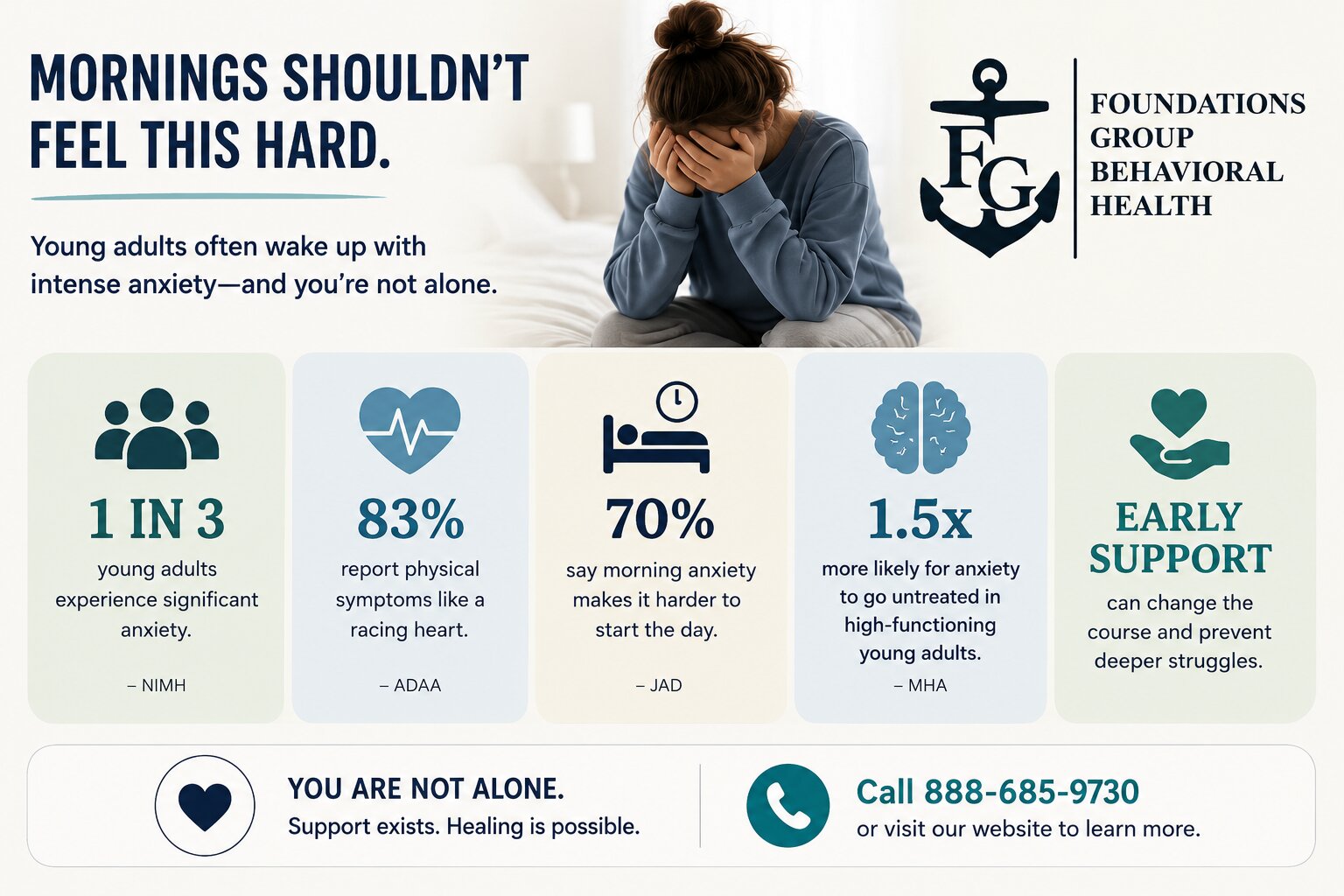
Emotional Pain in Young Adults Doesn’t Always Look Sad
This part surprises many parents.
Young adults dealing with anxiety often do not look obviously depressed or frightened all the time. Emotional pain can come out sideways.
It may look like:
- Irritability
- Defensiveness
- Mood swings
- Withdrawal
- Emotional numbness
- Sarcasm
- Avoidance
- Trouble communicating
Parents are sometimes shocked by how angry or disconnected their child becomes while secretly struggling emotionally underneath.
That doesn’t excuse hurtful behavior. But understanding the emotional context can help families respond with more clarity and less personal blame.
A nervous system stuck in survival mode often loses access to patience, flexibility, and emotional regulation.
Your Child’s Anxiety Is Not Proof You Failed
Parents carry enormous guilt around mental health struggles.
Many quietly ask themselves:
- “Did I miss signs earlier?”
- “Did I push too hard?”
- “Was I too strict?”
- “Was I too protective?”
- “Why can’t I fix this?”
Please hear this clearly:
Your child’s anxiety is not proof that you failed as a parent.
Mental health struggles are complex. Biology, stress, trauma, sleep, personality, social pressure, emotional sensitivity, and environmental factors can all contribute.
Most parents are doing the best they can while trying to understand something deeply painful in real time.
And your willingness to seek understanding already matters.
More than you may realize.
Early Support Can Prevent Deeper Struggles Later
A lot of families wait until symptoms become severe before seeking help.
But support does not need to wait for a crisis.
Sometimes structured mental health care helps young adults:
- Understand how anxiety affects the body
- Learn coping strategies for panic and overwhelm
- Improve emotional regulation
- Rebuild confidence gradually
- Develop healthier routines
- Process underlying emotional struggles
- Feel less alone in what they’re experiencing
Support is not about “fixing” your child.
It is about helping them build enough stability and emotional understanding that mornings stop feeling like something they need to survive.
And for many families, even small improvements create enormous relief.
You Don’t Need to Have All the Answers Right Now
One of the hardest parts of parenting through anxiety is uncertainty.
You may not fully understand what’s happening yet.
Your child may not understand it either.
That can feel terrifying because parents naturally want solutions. Clarity. A plan.
But mental health struggles often unfold slowly. Understanding usually comes step by step.
Right now, the most important thing may simply be recognizing:
- Your child’s distress is real
- Anxiety can become physically overwhelming
- You are not alone in this
- Support exists
- Things can improve with help
Sometimes hope begins there.
Not with perfect answers.
With realizing this struggle has a name—and that other families have survived it too.
Signs Your Child May Need More Support
It may help to seek additional support if your child:
- Wakes up anxious most mornings
- Experiences frequent panic symptoms
- Avoids school, work, or responsibilities due to fear
- Seems emotionally exhausted constantly
- Isolates more than usual
- Has significant sleep disruption
- Struggles to calm their body regularly
- Feels hopeless or overwhelmed often
- Has difficulty functioning consistently day to day
Support does not require a complete breakdown first.
In many cases, early intervention creates space for healing before anxiety becomes even more disruptive.
FAQ About Morning Anxiety in Young Adults
Why does my child wake up with a racing heart?
Anxiety can activate the body’s stress response system, causing physical symptoms like rapid heartbeat, chest tightness, nausea, or shakiness—especially in the morning when stress hormones naturally rise.
Can anxiety really feel this physical?
Yes. Anxiety often affects the nervous system and body just as much as thoughts and emotions. Physical symptoms are extremely common.
Why are mornings harder than nighttime?
The body naturally releases cortisol and other stress hormones after waking. For someone already struggling emotionally, this can intensify feelings of panic or dread early in the day.
Is my child being lazy or avoiding responsibility?
Not necessarily. Severe anxiety can make ordinary responsibilities feel emotionally and physically overwhelming. Accountability still matters, but understanding the underlying struggle is important too.
What if my child says they don’t know why they’re anxious?
That is very common. Anxiety is not always tied to one clear fear or situation. Some people experience chronic nervous system activation without a simple explanation.
Can someone have severe anxiety and still function outwardly?
Absolutely. Many people with high-functioning anxiety continue attending school, working, or socializing while privately struggling every day.
When should parents seek professional support?
If anxiety is interfering with daily functioning, emotional stability, sleep, relationships, or overall wellbeing, it may help to explore professional support options.
How should I talk to my child about anxiety?
Lead with curiosity and calmness instead of pressure or judgment. Feeling emotionally safe often helps young adults open up more honestly about what they’re experiencing.
If your child wakes up every morning already afraid of the day ahead, that does not mean they are weak, dramatic, or broken.
It may mean their nervous system is carrying more than it knows how to manage alone.
And support exists for that.
Call 888-685-9730 or visit our behavioral health treatment programs Massachusetts to learn more about our behavioral health treatment programs Massachusetts, anxiety treatment program services in Falmouth, MA.