
Getting diagnosed with depression can feel like someone suddenly turned the lights on in a room you didn’t know you were standing in.
For some people, the diagnosis brings relief—finally, a name for what they’ve been feeling.
For others, it opens the door to a new kind of fear.
Very quickly, the conversation often shifts to medication. And if you’re not sure you want antidepressants, you might feel stuck between two uncomfortable options: take something you’re unsure about or risk not getting help at all.
At Foundations Group Behavioral Health, we hear this concern every day. Many people entering a depression treatment program arrive with the same quiet question:
Can I still get help if I’m not ready for medication?
The short answer is yes. And more importantly—your hesitation is valid.
The Moment You Realize Something Isn’t Right
Depression rarely arrives all at once.
More often, it creeps in slowly.
Maybe you started noticing small changes:
- Feeling exhausted even after sleeping
- Losing interest in things you used to enjoy
- Struggling to concentrate at work or school
- Feeling disconnected from friends or family
At first, many people assume it’s stress, burnout, or just a difficult phase.
But eventually, something inside says: This isn’t going away on its own.
Getting a diagnosis can be both clarifying and overwhelming. Suddenly you’re being asked to think about treatment options, lifestyle changes, and possibly medication—all while you’re already feeling mentally drained.
That’s a lot for anyone to process.
Why So Many People Hesitate About Antidepressants
It’s incredibly common for newly diagnosed individuals to feel unsure about medication.
And the reasons are deeply personal.
Some people worry about side effects. Others are concerned about losing a sense of emotional range or creativity. Many simply don’t like the idea of relying on a daily pill to feel stable.
You might be thinking things like:
- “What if this changes who I am?”
- “Will I feel numb?”
- “What if I can’t stop taking it later?”
- “Does this mean something is permanently wrong with me?”
These questions aren’t signs of denial.
They’re thoughtful reactions to a major life decision.
Medication can be helpful for some people—but it isn’t the only way support happens, and a good care team understands that.
Depression Is More Than a Chemical Problem
One of the biggest misunderstandings about depression is the idea that it’s simply a chemical imbalance that must be corrected with medication.
In reality, depression often develops through a combination of experiences and circumstances:
- Long periods of stress or burnout
- Unresolved grief or loss
- Trauma or difficult life events
- Chronic loneliness or isolation
- Changes in sleep, routine, or physical health
When you look at depression this way, it becomes clear that healing often involves more than one approach.
People frequently begin to feel better through conversations, emotional processing, and building new coping strategies—not just through medication.
That’s why many programs focus heavily on therapy and structured support.
The Role of Structure When Depression Disrupts Daily Life
One of the hardest parts of depression is how it disrupts everyday functioning.
Tasks that once felt simple—like answering emails, making meals, or keeping appointments—can suddenly feel overwhelming.
Motivation drops. Energy disappears. Days blur together.
This is where structured care can make a meaningful difference.
Instead of facing each day alone, people participate in a supportive environment several days a week. Therapy sessions, guided discussions, and skill-building activities create a rhythm that helps rebuild stability.
Think of it like scaffolding around a building under repair.
You’re still doing the work of healing—but you’re no longer trying to balance everything without support.
Therapy Helps You Understand What Your Mind Is Carrying
Many people entering treatment discover something surprising: depression isn’t just about feeling sad.
It can also involve:
- Persistent self-criticism
- Difficulty making decisions
- Feeling emotionally numb
- Constant mental fatigue
- A sense of hopelessness about the future
Therapy helps untangle these experiences.
Through guided conversations, people begin to notice patterns in how they think and respond to stress. They learn tools for managing overwhelming emotions and ways to challenge thoughts that keep them stuck.
Over time, these small shifts can create meaningful changes in how daily life feels.
You’re Allowed to Change Your Mind Later
One important thing to remember is that treatment decisions are rarely permanent.
Some people begin care focusing entirely on therapy and support. Later, if symptoms remain overwhelming, they revisit the idea of medication with a clearer understanding of their needs.
Others find that therapy, structure, and lifestyle changes are enough to significantly improve how they feel.
Both experiences are valid.
What matters most is having space to explore your options without pressure.
A thoughtful treatment team will work with you, not push you.
The Moment People Realize They’re Not Alone
Depression often convinces people that their struggles are unique.
You may feel like everyone else has life figured out while you’re barely holding things together.
Group therapy can challenge that belief in powerful ways.
Hearing someone else describe feelings you thought only you had can be incredibly relieving.
It reminds you that depression is not a personal failure—it’s a human experience many people quietly navigate.
And when people support each other through that process, something important happens:
Hope starts to return.
Healing Doesn’t Always Look Dramatic
Many people expect recovery to happen in a dramatic moment—some sudden breakthrough where everything feels better.
More often, healing happens quietly.
You might notice small shifts first:
- Getting out of bed feels slightly easier
- Conversations feel less exhausting
- You laugh at something again without forcing it
- The future doesn’t feel quite as heavy
These changes build slowly, but they matter.
They’re signs that your mind is beginning to reconnect with life again.
FAQ: Common Questions About Starting Depression Treatment
Can I get help for depression without taking medication?
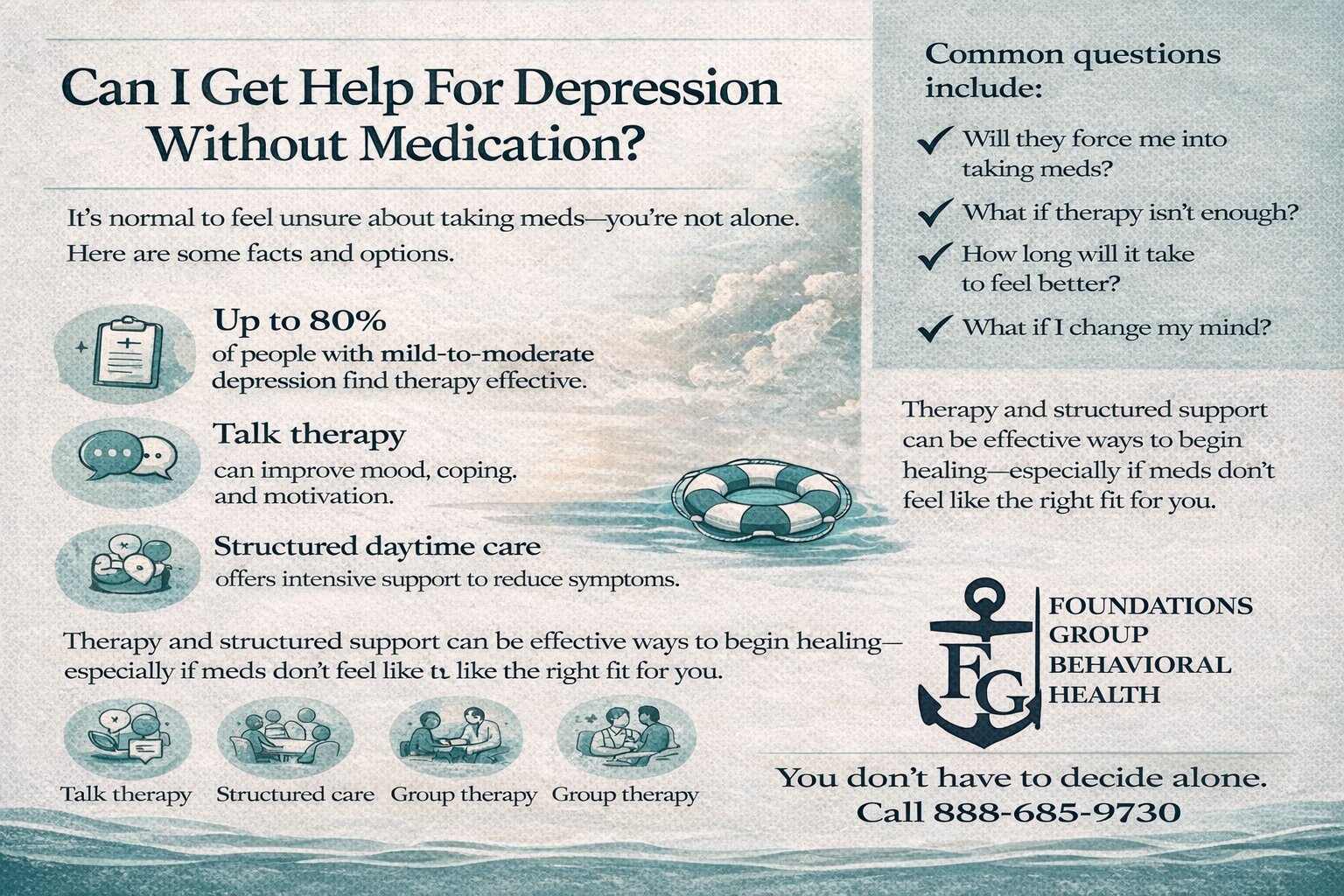
Yes. Many people begin treatment through therapy, structured support, and lifestyle changes before considering medication. A good clinical team will respect your preferences and help you explore options at a pace that feels comfortable.
What if I change my mind about medication later?
That’s completely okay. Treatment plans can evolve over time. If your symptoms change or you want to revisit medication options, your care team can help you evaluate that decision thoughtfully.
How long does it usually take to feel better?
Healing from depression looks different for everyone. Some people notice improvements within weeks of starting consistent therapy and support, while others experience gradual progress over several months. Small changes often appear first.
Is therapy really effective for depression?
For many individuals, therapy provides essential tools for understanding emotional patterns, managing stress, and rebuilding motivation. It can help people address the underlying factors contributing to their depression.
What if I’m not sure my depression is “serious enough” for treatment?
This is one of the most common doubts people have. If your mood, motivation, or daily functioning have changed in ways that concern you, speaking with a professional can still be helpful. You don’t have to reach a crisis point to benefit from support.
Will people judge me for getting treatment?
Many people worry about stigma, but seeking help for mental health is increasingly recognized as a responsible and courageous step. Most people who enter treatment quickly discover they’re surrounded by others facing similar challenges.
You Don’t Have to Figure This Out Alone
If you’re newly diagnosed and unsure about medication, it’s okay to take your time.
You’re allowed to ask questions.
You’re allowed to move slowly.
And you’re allowed to seek support that respects your concerns.
Depression can make the future feel uncertain—but you don’t have to navigate it by yourself. Personalized mental health care in Barnstable County, Falmouth, MA.
Call 888-685-9730 or learn more about our Depression treatment program services to explore your next step.