

I didn’t crash.
That’s what made it so confusing.
There was no dramatic moment. No clear line I crossed. No obvious reason to think I’d end up back in treatment.
I was doing what I was supposed to do. Staying consistent. Using what I learned. Keeping things together.
And still—something started slipping.
Not all at once. Just enough to notice.
At some point, I found myself quietly revisiting options like depression treatment services again—not because everything fell apart, but because something inside me didn’t feel right anymore.
It Didn’t Break—It Slowly Drifted
That’s the part people don’t really talk about.
You expect a breakdown to be obvious. Loud. Disruptive.
But sometimes it’s subtle.
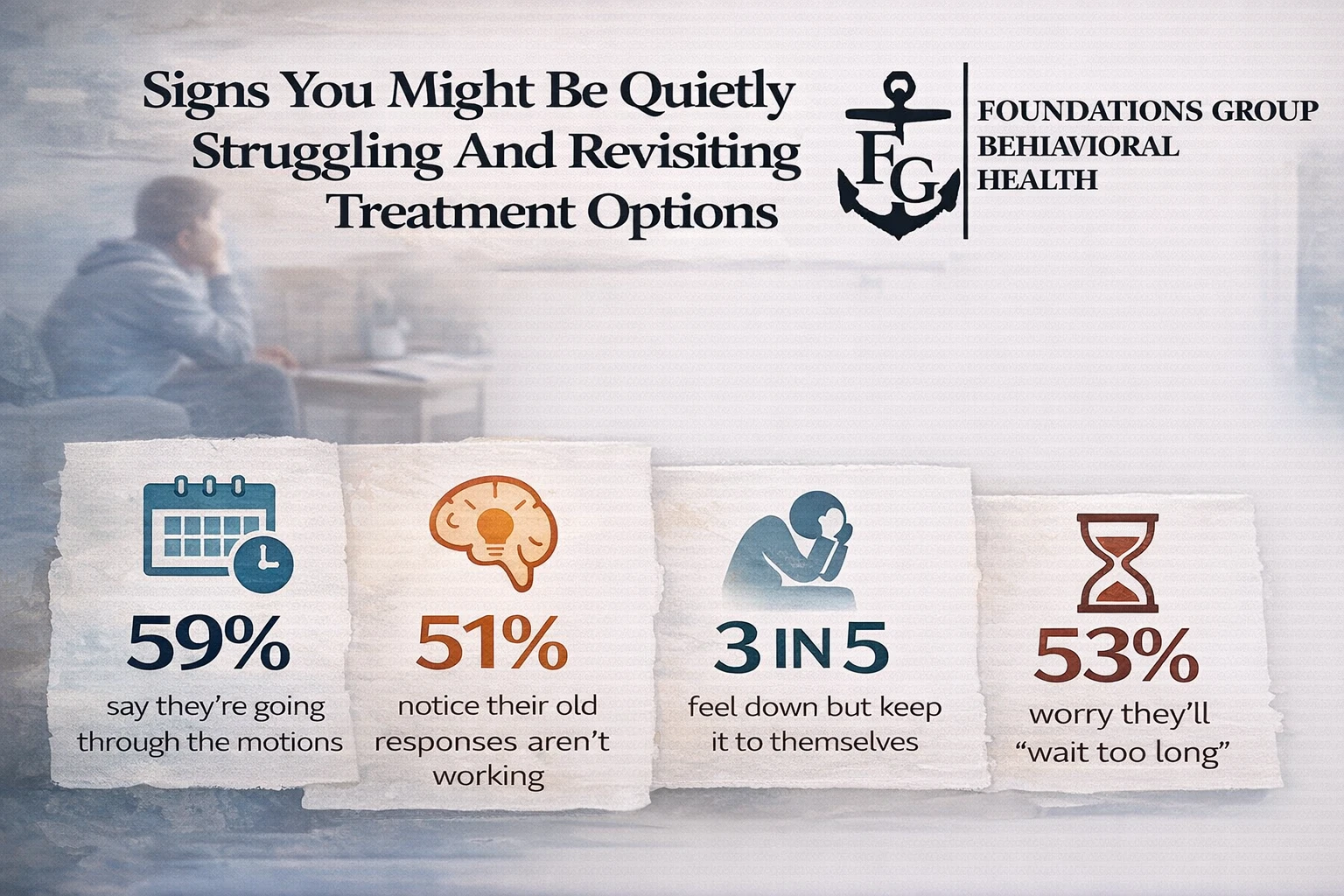
I started feeling a little more disconnected each day. Conversations felt heavier. The things that used to help—journaling, getting outside, reaching out—felt harder to access.
Not impossible.
Just… farther away than they should’ve been.
I kept telling myself it would pass.
But it didn’t.
I Kept Telling Myself This Didn’t “Count”
I wasn’t in crisis.
I wasn’t falling apart.
So I told myself it didn’t count as something serious.
That thought kept me stuck longer than anything else.
Because I was measuring my pain against a version of “bad enough” that didn’t apply anymore.
The truth is, you don’t have to be at your worst to need support.
You just have to be struggling.
The Pressure to Be Okay After You’ve Already Done the Work
This part hit harder than I expected.
The first time I got help, there was clarity. Something wasn’t working, and I needed support.
But the second time?
There was pressure.
Pressure to prove it “worked.”
Pressure to show I was better.
Pressure to not end up back where I started.
And when things felt off again, that pressure turned into silence.
Because admitting I needed help again felt like admitting I failed.
The Kind of Struggle That Hides in Plain Sight
From the outside, my life looked fine.
I was still showing up. Still handling responsibilities. Still functioning.
But inside?
Everything felt muted.
Like I was going through the motions of a life I wasn’t fully connected to.
That’s the kind of struggle that’s hardest to explain.
Because there’s nothing obvious to point to.
Just a quiet, persistent sense that something isn’t right.
The Moment It Finally Clicked
It wasn’t dramatic.
It was a thought I couldn’t shake:
“If I keep going like this, nothing is going to change.”
Not worse.
Not better.
Just stuck.
And that realization—that this might just continue indefinitely—was enough to make me stop pretending it would fix itself.
Going Back Felt Different This Time
I expected it to feel like failure.
Like starting from the beginning again.
But it didn’t.
It felt more honest.
Less about proving anything. More about understanding what was actually going on beneath the surface.
I wasn’t trying to fix everything at once.
I was just trying to stop ignoring what I felt.
I Wasn’t Starting Over—I Was Going Deeper
This changed everything.
Because once I stopped seeing it as “starting over,” I could see what was really happening.
I had already built awareness. I had already learned the tools.
Now, I was facing the parts I hadn’t fully addressed the first time.
And that required a different kind of support.
Not more information.
More space. More consistency. More honesty.
What Support Actually Helped With
The biggest shift wasn’t learning something new.
It was having a place to use what I already knew—consistently.
Because doing it alone wasn’t working anymore.
Support gave me:
- Structure when my energy dropped
- Accountability when I started avoiding things
- A place where I didn’t have to explain everything from scratch
In Barnstable County, Massachusetts, I started to see how common this actually is—people returning to support not because they failed, but because they’re paying attention earlier.
That changed how I saw myself.
The Search Felt Different This Time
The first time, I was overwhelmed.
I didn’t know what I needed—I just knew I needed help.
The second time, it was quieter.
More intentional.
I found myself searching things like depression therapy near me, not out of panic—but recognition.
I knew something was off.
And I didn’t want to wait until it got worse.
The Hard Truth About “Doing Everything Right”
This is the part that took me the longest to accept:
You can do everything right—and still struggle.
Because depression isn’t something you solve once.
It’s something you learn to navigate over time.
And sometimes, that navigation requires recalibration.
More support. Different support. Renewed support.
Not because you failed.
Because you’re still human.
A Story That Might Feel Familiar
I remember talking to someone else who had come back after months of doing well.
They said something that stuck with me:
“I thought I had to wait until things were bad again. But I didn’t want to go back there.”
That’s what this was for me.
Not reacting to a crisis.
Responding before one happened.
And that changed everything.
If You’re Quietly Struggling, This Might Be Your Sign
You might still be showing up.
Still functioning. Still doing what needs to be done.
But something feels off.
Disconnected. Heavy. Harder than it used to be.
You might be telling yourself it’s not serious enough.
That you should be able to handle it.
That it’ll pass.
Maybe it will.
But maybe it won’t.
And you don’t have to wait to find out.
You Didn’t Mess This Up
You didn’t ruin your progress.
You didn’t waste your first attempt.
You didn’t do something wrong.
You noticed something.
And noticing—that awareness—is what gives you a chance to respond differently this time.
Coming Back Isn’t Failure—It’s Movement
It may not feel like it.
But choosing to come back—to re-engage, to ask for help again—is not going backwards.
It’s choosing not to stay stuck.
It’s choosing to take yourself seriously before things fall apart.
And that matters more than getting it perfect ever could.
FAQs: For Anyone Who Thought They Were Past This
Why did I end up struggling again even though I did everything right?
Because recovery isn’t a one-time fix. Life changes, stress builds, and new emotional layers can surface over time.
Does this mean treatment didn’t work?
No. It means it helped you get to a place where you can recognize when something feels off—and respond to it.
How do I know if I need help again?
If you’re asking the question, it’s worth exploring. You don’t need to wait for things to get worse.
What if I feel embarrassed about going back?
That’s normal. But many people return to support at different points. It’s more common than people admit.
Will it be different the second time?
Yes. You’re coming in with more awareness, which often leads to deeper, more meaningful work.
Can I get support without completely stepping away from my life?
In many cases, yes. Flexible options allow you to receive support while maintaining your daily responsibilities.
A Final Thought to Hold Onto
You don’t have to prove how bad it is.
You don’t have to wait for everything to fall apart.
You don’t have to do this alone just because you’ve done it before.
Sometimes the strongest move isn’t pushing through.
It’s recognizing when something needs attention—and responding to it honestly.
If you’re starting to feel that pull toward support again, you don’t have to figure it out alone. Call 888-685-9730 to learn more about our Depression treatment in Cape Cod, MA.