

There’s a weird stage in early recovery where nothing feels normal yet.
You’re doing the work… but you also feel like the only sober person in the room.
If you’re currently in care or thinking about it, this might help: growth rarely feels dramatic. Sometimes it just looks like slightly better days and slightly fewer bad ones.
If you’re exploring support like a bipolar disorder treatment program in Massachusetts, these are some of the quiet signs things are actually working.
1. Your Reactions Slow Down (Even Just a Little)
You might not feel “calm,” but you notice a small pause between feeling something and reacting.
That moment matters.
Where you used to spiral instantly, now there’s sometimes a breath, a walk, or a text to someone safe.
That pause is growth.
2. You Start Noticing Your Patterns
Early on, it feels like moods and reactions come out of nowhere.
Then one day you catch yourself thinking:
“Oh… this is the same situation that usually sets me off.”
That awareness isn’t failure.
It’s the beginning of real change.
3. You Feel Things More Clearly
This one can feel like a step backward.
When numbness fades, emotions show up louder than expected—joy, anger, anxiety, sadness. All of it.
But feeling isn’t the problem.
Feeling is the nervous system waking back up.
4. You’re Learning How to Talk About What’s Going On
At first it’s awkward.
You sit in a group or session thinking: What am I even supposed to say?
Then slowly you start putting words to things like stress, mood swings, or burnout.
That ability—to name what’s happening inside you—is one of the most powerful skills you’ll build.
5. You’re Making Slightly Better Decisions
Not perfect decisions. Just better ones.
You might leave a situation earlier.
You might choose sleep instead of pushing through exhaustion.
Recovery isn’t about becoming a different person overnight.
It’s about stacking better choices one day at a time.
6. You Realize You’re Not the Only One
At first, treatment can feel like social planet Mars.
Everyone seems comfortable. You feel like the awkward new kid.
Then someone says something that sounds exactly like a thought you’ve had but never said out loud.
That moment—oh wow, it’s not just me—changes everything.
7. Your Good Days Start Lasting Longer
Early recovery often feels like emotional whiplash.
But gradually you may notice something subtle:
The good days stretch a little longer.
The tough days don’t swallow the whole week.
That’s stability building underneath the surface.
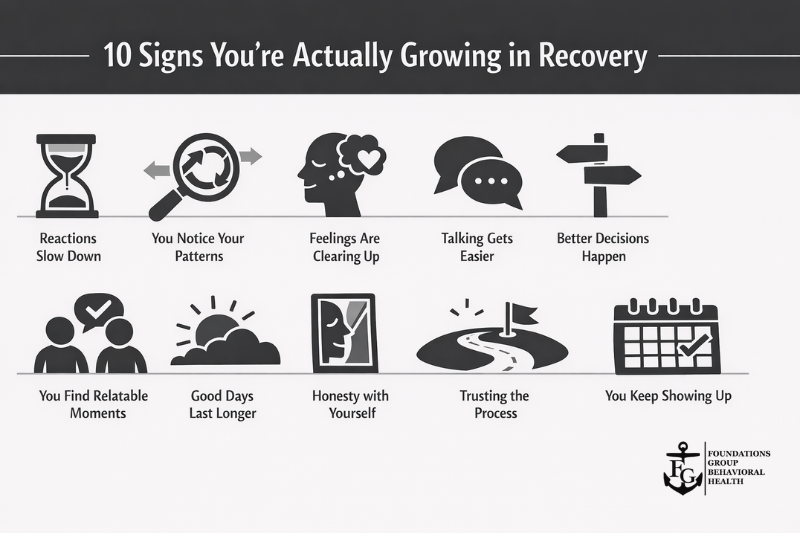
8. You’re Becoming More Honest With Yourself
Not dramatic honesty. Quiet honesty.
Like admitting when you’re overwhelmed.
Or when your mood is shifting faster than you’d like.
That kind of honesty creates space for real support.
9. You’re Beginning to Trust the Process (Even If You’re Skeptical)
Most people don’t walk into treatment thinking, This will definitely work.
Skepticism is normal.
But over time you might catch yourself thinking:
“Okay… maybe this is helping a little.”
Sometimes belief follows experience—not the other way around.
10. You’re Still Showing Up
This one matters more than anything.
Some days you feel motivated.
Some days you feel like the weird sober person watching everyone else live normally.
And yet… you keep showing up.
That consistency is how real change happens.
If you’re currently exploring behavioral health treatment programs Massachusetts residents rely on for long-term stability, remember this: growth in recovery often feels quiet, awkward, and slow at first.
But slow growth is still growth.
Recovery doesn’t mean becoming someone else. It means learning how to live as yourself without the chaos running the show.
If you’d like to explore structured support options, you can learn more about our bipolar disorder treatment program in Massachusetts and how care can help stabilize mood, build skills, and support long-term progress.
Call 888-685-9730 or visit our behavioral health support page to learn more about our behavioral health treatment programs Massachusetts, bipolar disorder treatment program Massachusetts services.