

Some people expect depression to feel loud.
They picture nonstop crying, panic attacks, or not being able to get out of bed. And while depression can look like that, it doesn’t always.
Sometimes it feels strangely quiet.
You go through the motions. You answer texts. You make it to work. You sit through conversations and even laugh at the right moments. But underneath it all, something feels disconnected. Flat. Distant.
If you’ve been searching things like “why do i feel numb” or wondering why sadness seems to follow you for no obvious reason, you are not alone. At Foundations Group Behavioral Health’s depression treatment program, we talk to people every day who feel confused by this exact experience.
And one of the first things we want them to know is this:
Emotional numbness is still emotional pain.
Emotional Numbness Can Feel More Confusing Than Sadness
Sadness at least feels recognizable.
Numbness can make people question themselves entirely.
Many people describe emotional numbness as:
- Feeling detached from life
- Not reacting emotionally the way they used to
- Losing interest in things they once loved
- Feeling empty instead of upset
- Feeling disconnected from other people
- Going emotionally “blank”
- Caring less about things that normally matter
Some people say it feels like they’re watching life happen through glass.
Others describe it as emotional static — like every feeling is muffled before it reaches them.
That experience can become deeply isolating because it often doesn’t look serious from the outside. Friends may think you seem “fine.” Coworkers may still see you as dependable. Family members might not notice anything has changed at all.
Meanwhile, internally, you may feel like you disappeared somewhere along the way.
Your Mind May Be Exhausted From Carrying Too Much
A lot of people assume numbness means they aren’t emotional enough.
In reality, emotional numbness is often connected to emotional overload.
The brain and nervous system are not designed to stay under constant stress forever. Over time, ongoing anxiety, depression, burnout, grief, trauma, or emotional pressure can begin to overwhelm the system.
And sometimes, instead of staying emotionally “on” all the time, the brain starts dimming things down to survive.
Not because you’re broken.
Because you’re tired.
Imagine carrying heavy grocery bags every day without ever setting them down. Eventually, your arms stop registering the strain the same way. The weight hasn’t disappeared — your body has simply adapted to carrying it.
Emotional numbness can work similarly.
You may not consciously feel every emotion anymore because your system has been overloaded for too long.
Depression Isn’t Always Obvious
One of the reasons people delay getting help is because they don’t believe their symptoms are “serious enough.”
Especially if they’re still functioning.
But high-functioning depression is real. A person can keep working, parenting, socializing, and appearing successful while internally struggling with emptiness or hopelessness.
Some warning signs can include:
Signs You Might Be Struggling More Than You Realize
- You feel emotionally flat most days
- You struggle to feel excitement or joy
- Everything feels draining, even small tasks
- You feel disconnected from people you care about
- You isolate more than you used to
- Sleep feels exhausting instead of restorative
- You feel guilty for not feeling “grateful enough”
- You constantly wonder what’s wrong with you
A lot of people quietly normalize these experiences for months or years.
They tell themselves:
- “I’m just stressed.”
- “Everybody feels this way.”
- “I need to toughen up.”
- “I should be able to handle this.”
But emotional numbness is not something you have to simply endure forever.
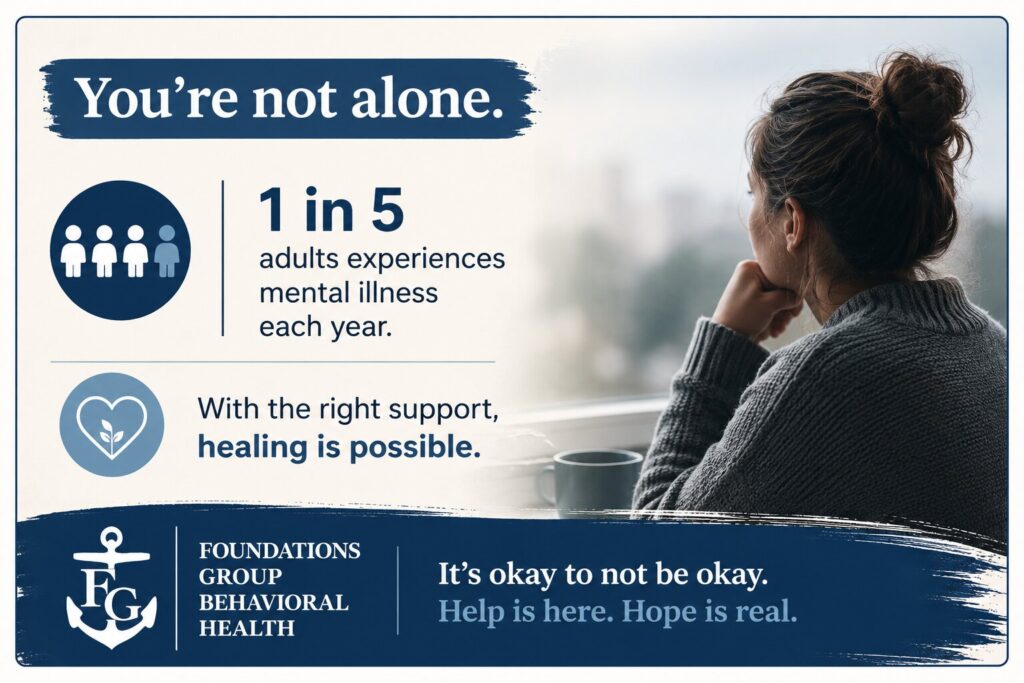
Sometimes Numbness Is Connected to Anxiety, Too
People often separate anxiety and depression into completely different categories.
But many people experience both at the same time.
In fact, emotional numbness can happen after long periods of chronic anxiety.
When your nervous system stays in survival mode for too long — constantly anticipating stress, pressure, conflict, or fear — emotional shutdown can become a form of protection. It’s hard to feel joy, connection, or peace when your brain is focused entirely on getting through the day.
This is one reason some people feel both emotionally numb and mentally overwhelmed at the same time.
Their thoughts race, but emotionally they feel disconnected.
Their body stays tense, but internally they feel empty.
That contradiction can feel confusing if you’ve never experienced it before.
There Doesn’t Have to Be a “Big Reason”
One of the hardest parts about emotional numbness is that people often feel guilty if they can’t point to a dramatic explanation.
They think:
- “Nothing bad enough happened to me.”
- “Other people have it worse.”
- “I shouldn’t feel this way.”
But mental health struggles do not require permission to exist.
Sometimes emotional numbness develops after obvious trauma or loss. Other times it builds slowly through years of stress, burnout, loneliness, emotional suppression, perfectionism, or chronic pressure.
Pain doesn’t always arrive all at once.
Sometimes it accumulates quietly.
Like water slowly filling a room without anyone noticing until it becomes impossible to ignore.
Social Media and Modern Life Can Make It Worse
A lot of people feel emotionally disconnected right now, even if they don’t talk about it openly.
Modern life asks people to stay constantly productive, constantly reachable, constantly “on.” At the same time, social media creates endless opportunities to compare ourselves to other people’s highlight reels.
That combination can leave people emotionally exhausted without realizing it.
You may start feeling:
- Detached from yourself
- Overstimulated but emotionally empty
- Constantly distracted
- Lonely even around other people
- Like your brain never fully rests
And because emotional numbness often develops gradually, people adapt to it without recognizing how much they’ve lost emotionally.
That’s the hidden cost.
Not just sadness — but disconnection from your own life.
The Dangerous Part Is Getting Used to It
One of the biggest risks of emotional numbness is normalization.
People stop expecting themselves to feel better.
They settle into survival mode.
Days blur together. Relationships become harder to maintain. Motivation fades. Joy feels distant. Some people even begin wondering whether they’ll ever feel like themselves again.
That hopelessness can become heavy over time.
Especially when someone feels like they “should” be okay.
But healing is possible, even if your emotions feel muted right now.
And importantly, healing does not always happen through giant breakthroughs.
Sometimes recovery begins with very small moments:
- Sleeping slightly better
- Feeling present during one conversation
- Laughing genuinely for the first time in months
- Admitting out loud that you’re struggling
- Letting someone help you carry what you’ve been carrying alone
Those moments matter more than people realize.
Treatment Isn’t About “Fixing” You
Many first-time treatment seekers feel afraid because they imagine treatment as something harsh, clinical, or life-altering.
But depression treatment is not about punishing you for struggling.
It’s about helping you reconnect with yourself.
For some people, that means therapy. For others, it means structured daytime care, medication support, group therapy, or learning healthier ways to manage stress and emotional overwhelm.
Most importantly, treatment creates space to stop pretending you’re okay all the time.
And for many people, that alone feels like relief.
You do not need to wait until everything completely falls apart before asking for support.
You are allowed to get help simply because life has stopped feeling manageable or emotionally real.
FAQ About Feeling Emotionally Numb and Sad
Is it normal to feel numb for no reason?
Emotional numbness is more common than many people realize, especially during periods of chronic stress, anxiety, depression, burnout, or emotional overload. Even if you can’t identify one specific cause, your feelings are still valid.
Can depression make you feel emotionally numb instead of sad?
Yes. Depression does not always look like crying or obvious sadness. For many people, it feels more like emptiness, disconnection, low motivation, or difficulty feeling anything at all.
Why do I feel numb but still anxious?
Anxiety and emotional numbness often happen together. Long-term anxiety can overwhelm the nervous system, causing emotional shutdown as a coping response. Some people feel mentally overwhelmed while emotionally disconnected at the same time.
Will emotional numbness go away on its own?
For some people, temporary numbness improves with rest, stress reduction, and support. But if the feeling has lasted for weeks or months, or it’s affecting your relationships, work, or daily life, professional support may help you understand what’s underneath it.
Does feeling numb mean something is wrong with me?
No. Emotional numbness is often a sign that your mind and body are overwhelmed, not that you’re weak or broken. Many people experiencing depression, anxiety, burnout, or unresolved emotional pain go through periods of feeling disconnected.
When should I talk to someone about it?
If emotional numbness is making daily life feel difficult, isolating, or hopeless, it may help to talk with a mental health professional. You do not need to wait for a crisis to deserve support.
You don’t have to keep carrying this quietly.
Call 888-685-9730 or visit our Depression treatment program services to learn more about our Depression treatment program services in Falmouth, MA.