

There’s a certain kind of exhaustion that comes from trying over and over to feel okay again.
You promise yourself this week will be different. You’ll sleep more. Get outside more. Be more positive. Drink less. Isolate less. Push yourself harder. Think differently.
Sometimes it helps for a little while.
And then somehow, quietly, you end up back in the same emotional place again.
Tired. Numb. Disconnected. Overwhelmed.
For many people, this cycle creates a deep sense of frustration and self-doubt. Especially for people who are sober curious or already trying to build a healthier relationship with themselves. At a certain point, the question stops being, “Why am I struggling?” and becomes something harder:
“Why does this keep happening?”
At Foundations Group Behavioral Health’s depression treatment program, we work with many people who feel stuck in that exact loop — trying incredibly hard to feel better while quietly wondering whether they need a different kind of support than they’ve been giving themselves.
Trying Harder Is Not Always the Answer
A lot of people approach emotional pain the same way they approach stress at work.
Push through it.
Stay productive.
Don’t complain.
Keep functioning.
But depression and emotional burnout do not always respond to willpower alone. In fact, constantly forcing yourself forward while emotionally struggling can sometimes deepen the exhaustion underneath it all.
This is especially common among people who are “high functioning.” The people who still show up. Still handle responsibilities. Still answer texts and smile in public while internally feeling drained.
From the outside, it may not look serious.
Inside, though, it can feel like carrying a backpack full of wet cement every single day.
And eventually, even strong people get tired of carrying things alone.
Pay Attention to the Pattern, Not Just the Crisis
One rough month does not automatically mean you need intensive support.
But repeated emotional cycles matter.
Especially if you notice yourself:
- Pulling away from people more often
- Feeling emotionally numb for long stretches
- Losing motivation repeatedly
- Starting and stopping coping routines constantly
- Feeling temporarily better before crashing again
- Struggling to maintain daily functioning
- Using distractions to avoid how overwhelmed you feel
- Feeling hopeless every time symptoms return
A lot of people focus only on their worst moments instead of the overall pattern.
But patterns tell the real story.
If you’ve spent months or years repeatedly trying to “reset” yourself emotionally without lasting improvement, that may not mean you’re failing.
It may mean your current support system is no longer enough for what you’re carrying.
Emotional Survival Mode Can Become Your Normal
One of the hardest parts about recurring depression is how gradually it can take over your life.
At first, you notice stress.
Then exhaustion.
Then emotional detachment.
Then eventually, survival mode starts feeling normal.
You stop expecting joy consistently. You stop feeling emotionally present. You begin measuring your days by whether you made it through them instead of whether you actually experienced them.
A lot of people don’t even realize how disconnected they’ve become until they briefly feel okay again.
That moment can feel shocking.
Like realizing you’ve been underwater longer than you thought.
Different Types of Support Exist for a Reason
Many people delay treatment because they assume mental health care is all-or-nothing.
Either they handle things completely alone, or they imagine entering some extreme level of treatment forever.
But support exists on a spectrum.
Some people benefit from:
- Weekly therapy sessions
- Medication management
- Group therapy
- Structured daytime care
- Multi-day weekly treatment
- Live-in treatment for more severe struggles
- Trauma-focused support
- Mental health care that addresses burnout, anxiety, and depression together
And importantly, people move between levels of support all the time depending on what life requires.
This is one reason online conversations around therapy vs medication for depression can become misleading. The conversation often gets framed like a debate where one option must be “better.”
But mental health is more personal than that.
For some people, therapy creates life-changing insight and emotional relief. For others, depression symptoms become so overwhelming that medication helps create enough stability to engage fully in therapy. Many people benefit from both together.
The goal is not choosing a side.
The goal is helping you feel like yourself again.
Repeating the Same Coping Strategies Can Become Its Own Trap
This part can be hard to admit.
Sometimes people outgrow the coping strategies they’ve relied on for years.
Maybe distraction used to help. Maybe staying busy worked for a while. Maybe isolating felt safer than being vulnerable. Maybe substances temporarily softened difficult emotions. Maybe avoiding your feelings kept you functioning.
But eventually, coping strategies that once protected you can start keeping you stuck.
A lot of sober curious people understand this deeply because they’ve already begun questioning whether numbing, avoiding, or constantly escaping difficult emotions is actually helping anymore.
That awareness matters.
Because recognizing the cycle is often the first real step toward changing it.
More Support Does Not Mean You’ve Failed
This is important enough to repeat clearly:
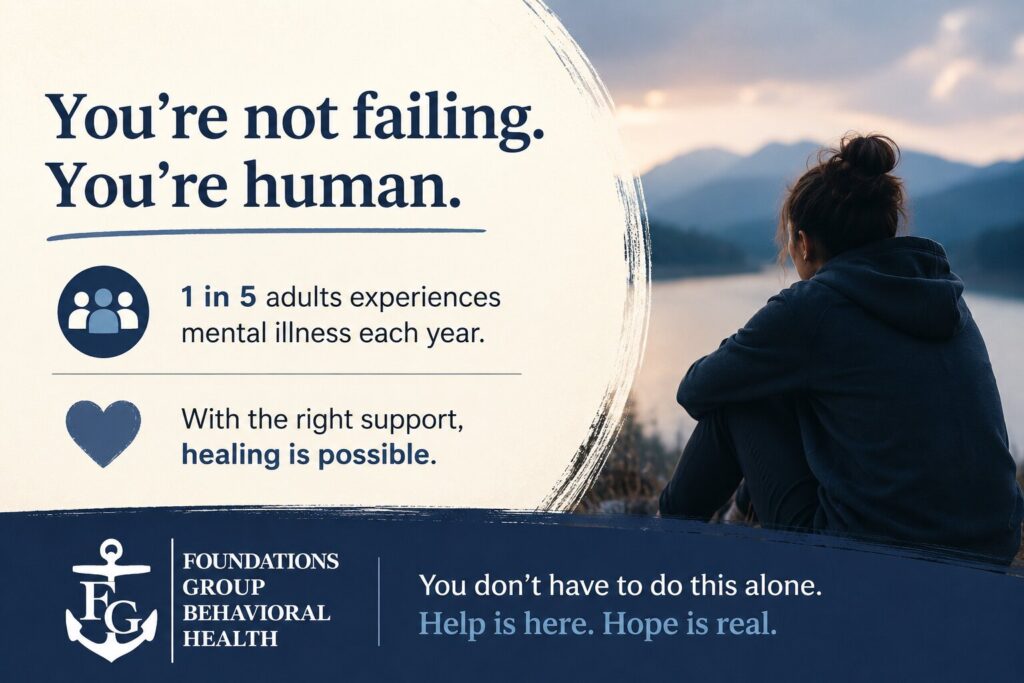
Needing additional support does not mean you are weak.
It does not mean you are broken.
And it does not mean recovery is hopeless.
In fact, many people only begin improving once they stop trying to handle everything completely alone.
Structured support can provide things people often lose during depression:
- Routine
- Accountability
- Emotional connection
- Stability
- Rest
- Perspective
- Professional guidance
- A place where they no longer have to pretend they’re okay
For some people, treatment is the first environment where they feel safe enough to stop performing wellness and start being honest about how exhausted they actually are.
And honesty can be incredibly healing.
Healing Usually Looks Smaller Than People Expect
Many people imagine healing as a dramatic breakthrough moment.
But most emotional recovery happens quietly.
It looks like:
- Sleeping through the night consistently
- Feeling mentally clear for a few hours
- Having energy to answer messages again
- Feeling connected during conversations
- Laughing naturally instead of forcing it
- Looking forward to something small
- Feeling emotionally present in your own life again
Those moments may sound simple.
But after long periods of emotional exhaustion, they can feel enormous.
Healing is often less about becoming a brand-new person and more about slowly returning to yourself.
You Are Allowed to Want More Than Survival
A lot of people stay stuck because they convince themselves things are “not bad enough” to deserve help.
But you do not need to wait for a complete collapse before reaching out.
You are allowed to want a life that feels fuller than survival mode.
You are allowed to seek support because you’re tired of repeating the same emotional cycle.
You are allowed to ask for help before hopelessness completely takes over.
And honestly, that choice is often a sign of strength — not weakness.
FAQ About Repeated Emotional Crashes and Seeking More Support
How do I know if I need a different level of mental health care?
If your symptoms keep returning despite your current coping strategies, therapy, or routines, it may help to explore additional support options. Recurring emotional crashes, worsening depression, isolation, or difficulty functioning are all signs that more structured care could help.
Is it normal for depression to keep coming back?
Yes. Depression often happens in cycles, especially when underlying stress, trauma, anxiety, or burnout are not fully addressed. Many people experience periods of improvement followed by emotional setbacks.
Does needing more support mean my mental health is getting worse?
Not necessarily. Sometimes it simply means your current support system no longer matches your current stress level or emotional needs. Seeking additional care can actually prevent symptoms from worsening over time.
What if therapy alone hasn’t been enough?
That does not mean therapy failed. Some people benefit from combining therapy with medication support, structured daytime care, or group treatment. Mental health care often works best when it’s personalized instead of one-size-fits-all.
How do I decide between therapy and medication?
Conversations around therapy vs medication for depression are highly personal. Some people respond well to therapy alone, while others benefit from medication or a combination approach. A mental health professional can help you explore options based on your symptoms, goals, and daily functioning.
What if I’m scared treatment won’t work?
That fear is extremely common, especially for people who’ve struggled for a long time. But treatment is not about becoming perfect overnight. Often, it’s about creating enough support and stability for healing to finally begin.
Can structured care help even if I’m still functioning?
Yes. Many people seek treatment while still working, parenting, or managing responsibilities. You do not need to completely “fall apart” before deserving support.
You don’t have to keep repeating the same emotional cycle alone.
Call 888-685-9730 or visit our Depression treatment program services to learn more about our Depression treatment program services in Barnstable County, MA.